November 29, 2010

In Progress

DSC_0142

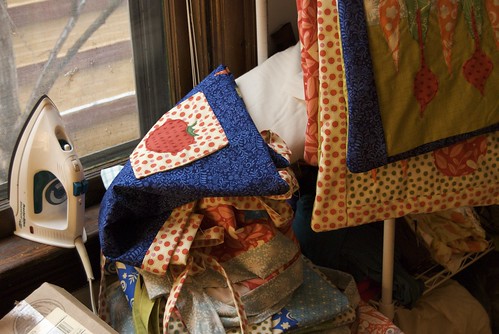
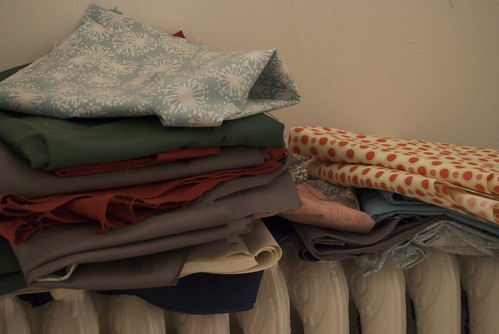
I am in a bit of a sewing frenzy this week, getting ready for a craft fair on Saturday. In all of this making, sometimes it seems like each new idea improves vastly upon all of the others. I do enjoy the process, but I will be glad when the frenzy is over. I am looking forward to making Christmas presents and working on some ideas for myself.

DSC_0145

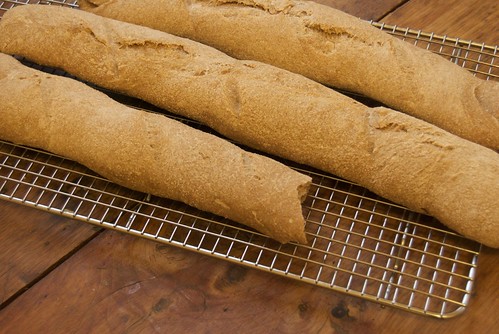
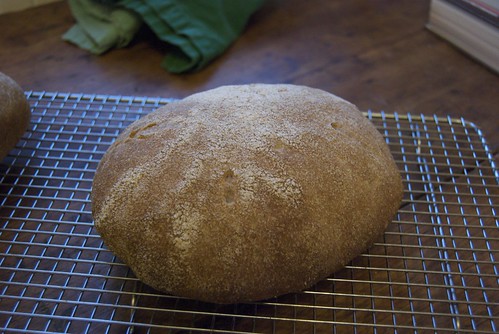
Today its just sewing and an attempt at sourdough baguettes, which didn't go perfectly this time but I will definitely try again.

Sourdough Baguettes, first try

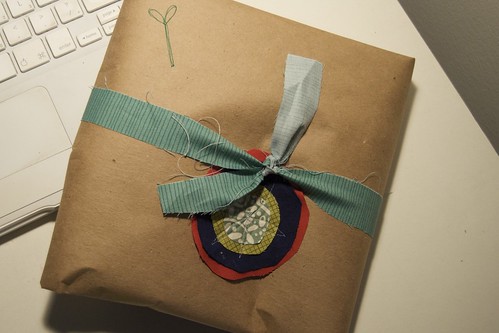
I have projects and recipes that I want to share with you, they will be coming soon! Now I am off to deliver a bag that the owner of the bakery around the corner bought from my shop. It's all wrapped up and I'm delighted that I can hand deliver it.

DSC_0141

November 24, 2010

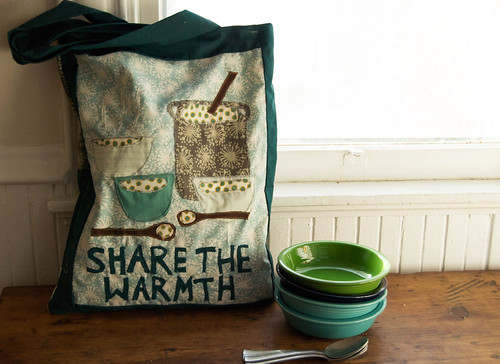
Share the Warmth

When the weather is freezing, snowflakes fluttering under gray skies, the darkness comes early and I love the light that comes from inside bright windows in cozy houses. It spills into the darkness and brings a touch of warmth to a winter night. I know its not officially winter, but here in Minnesota, it certainly feels like it is. We're expecting a winter storm to usher in Thanksgiving and hence it is the time of year for warm and cozy.

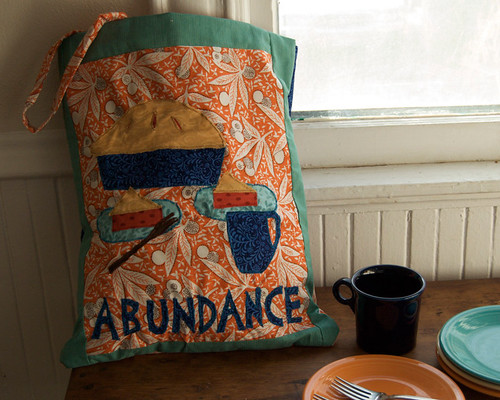
pie abundance bag

Our Thanksgiving this year will be very low key, just two of us cooking a few of our favorite dishes, relaxing, maybe playing a game or some music. I love this holiday because, while it can be a complicated production, it is really all about the best things in life: good food, family, friends, and taking time to appreciate everything that we have.

share the warmth green bag


I've been making various preparations for the start of the "holiday season." In a flurry of making aprons and bags for my shop I've made some new bags that, for me, encompass a lot of what I want for these wintery holidays. Warmth, coziness, sharing food and joy. I've also been thinking about projects I want to work on and share here and what I will be making and sharing with friends and family. I know this is a very busy season, but I want to be mindful of the time and do my best to enjoy preparations and celebrations.

share the warmth redbag

I know that sharing warmth, light and joy are not exclusive to this time of year. Winter certainly stretches on long past January. But I like taking this time to celebrate all the abundance of good things that we have, and to remember to share them with anyone I can. A cup of tea, a slice of pie or a mug of hot chocolate, a friendly conversation, a handmade gift, soup, bright lights in the darkness.

Wishing you a wonderful, warm, abundant Thanksgiving if you are celebrating tomorrow!

November 18, 2010

A Crafty Holiday

Thanks to Angela from The Artist's House we are hopping from blog to blog to share ideas about buying handmade and making it a crafty holiday. A whole variety of bloggers are participating to inspire all of us to choose handmade.

Let me start my thoughts on this topic by confessing two things. One: I usually don't like to think about Christmas until well after Thanksgiving, around December 1. Two: I often try to make all my gifts rather than buy them.

Now, you may see the problem with these two things. Without much time to plan ahead it is hard to make all the gifts that I intend to. Usually, after a whirlwind of making that ends just before December 25, I vow that next year I will start sooner. So, here I am. I've been thinking about what I want to give for the holidays this year. I've also been thinking about what I want to make. It all comes down to handmade.

It is so important to me to give things that are made with care, by people who are fairly compensated for their work, using materials and practices that are not harmful. Whether it is made by me or someone else, giving handmade seems like the best way to ensure all of this. It frequently amazes me to realize all of the unique and carefully crafted things that people are making and the huge variety of these that you can find online, at craft fairs and holiday sales and in local shops.

Some items that I love (and would joyfully give or receive):

a-crafty-holiday

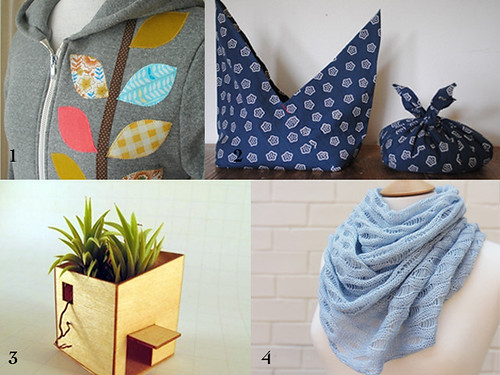
1. A cozy and beautiful Autumn Vine Hoodie from Anna Joyce
2. Creative and lovely Origami Reusable Food Bags from The Fabric Society
3. A Tiny House from My House Party
4.The Ocean Waves Scarf from Knit Frekkles

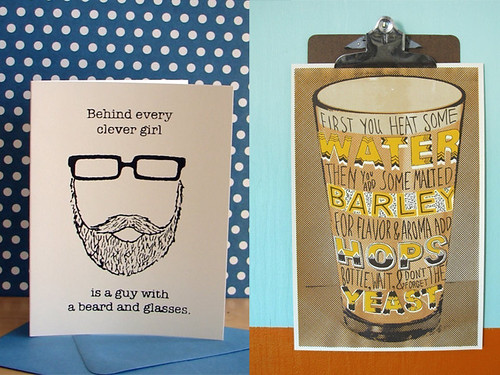
There are a couple of handmade gift ideas (below) that made me think of my husband, Ray. I love this card from eggagogo because its a funny way of saying that I really appreciate all of his love and support and I don't know how I would do everything that I dream of without him. He brews beer in our kitchen so I think he would appreciate this wonderfully designed Beer print from Manvsink.

handmadefortheholidays

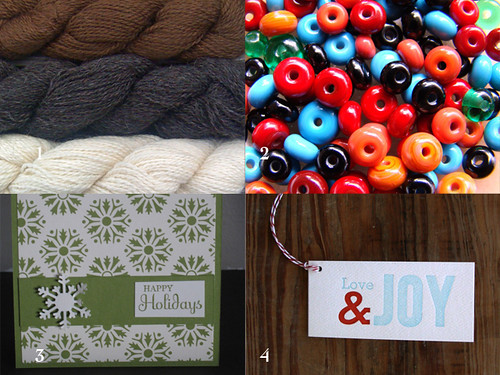
Finally, I wanted to remind you that even if you are making your own handmade gifts, you still can find supplies, gift tags or seasonal cards made with care by other creative people .

crafty-holiday


1. Beautiful yarn from icelandic sheep from Woolever Farm In Maine.
2. Handmade Glass Beads from Cynthia Murphy.
3. Sweet holiday cards from Plain Jane Store.
4. Wonderfully designed letter press Love and Joy Gift Tags from Red Bird Ink.

If I haven't given you enough ideas and reasons to buy handmade, especially for the holidays, check out the previous Crafty Holiday posts and be sure to hop along tomorrow to see what Brandi has to say at brandi girl.

November 15, 2010

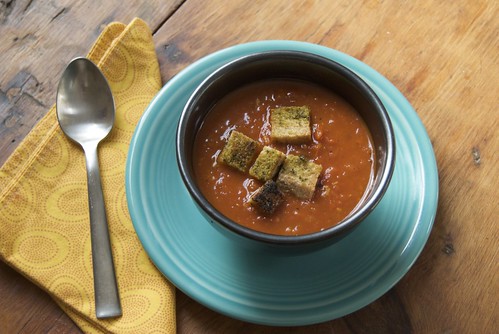
Simple Tomato Soup

simple tomato soup

I walk into the bedroom to tell Ray that dinner is ready. He asks what we are having.
      "Tomato soup with pesto croutons," I reply.
      "Is it like Campbell's Tomato Soup?" He asks with hesitation in his voice.
      "I don't know, I've never had Campbell's before. But, I don't think this soup will be as salty or as     watery as Campbell's"
      "Good, cause I don't like canned tomato soup"

We sit down to bowls of steaming hot bright red soup. Its simple, very tomato-y, warm, and perfect for the chilly snowy weekend we had here. The soup would pair well with bread or another grain on the side, but we ate ours with roasted vegetables, so I made some croutons brushed with pesto to sprinkle on top. It was thoroughly satisfying and we both ate well.

Simple Tomato Soup
I am very content with letting the tomatoes be the star of this soup, but you could add various spices to enhance the flavor. Cumin, paprika or basil would work well. While the soup is simmering, make the croutons.

Olive oil
1 medium sized onion, diced
2 cloves of garlic, minced
1 quart of diced, whole, or roasted tomatoes
3 cups of vegetable broth
Salt, pepper and spices to taste (I added a half teaspoon of cumin and a dash of cayenne)

Place a soup pot over medium heat. Add a glug of olive oil and when it is heated, add the onions and garlic. Cook until they become soft and slightly caramelized, about 10 minutes. Add the tomatoes and broth and bring to a simmer. Carefully puree the soup until it is mostly pureed but not completely smooth. Add salt, pepper and spices to taste. Let simmer for another 10 to 15 minutes.
Makes enough to serve two as a meal and four with something on the side. 


Pesto Croutons
Two slices of whole wheat bread
Two tablespoons of pesto 

Preheat the oven to 350 (if you have a toaster oven, this will fit nicely). Spread both sides of each piece of bread with the pesto. Cut the bread into one-inch strips and then cut the strips into one-inch squares. Place the bread squares on a baking sheet and place in the oven for about 10 minutes. After 10 minutes, check the croutons. They should be well toasted, but the won't be totally crisp until they cool for a few minutes. If they're not done, move them around a bit with a spatula and put them back in the oven until they are toasted. Sprinkle on top of the soup to serve

November 12, 2010

Make it Yourself: A Potholder Tutorial

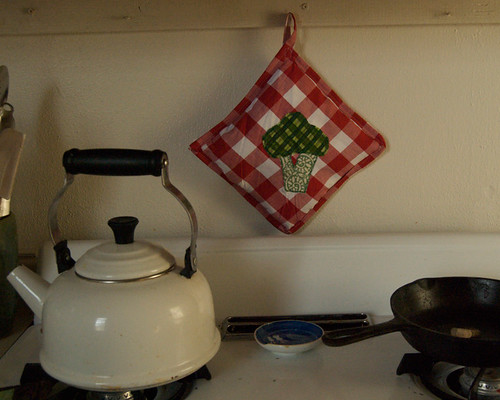
makeapotholder1

I've been wanting to share this simple project with you for a while. This potholder is easy to sew and very useful in the kitchen. I use mine a lot, throw them in the wash when they need it and, every so often, make a new one as the others become too worn. They also make a great handmade gift which I like to give along with a jar of preserves or salsa, and some homemade sweets or baked goods. It's a pretty simple gift that, for me, reflects things that I care about and want to share. In the next few weeks I hope to share some other ideas for handmade gifts.

As you know, I love being able to make things myself and this is another thing you can make instead of buy. It is completely utilitarian but you can make it as beautiful or simple as you want. A potholder doesn't require a lot of fabric so you can use a left over piece  that you like or choose something to match your kitchen.  You only need to be able to sew a straight stitch and, while a machine sews it up tightly, you can even sew it by hand.

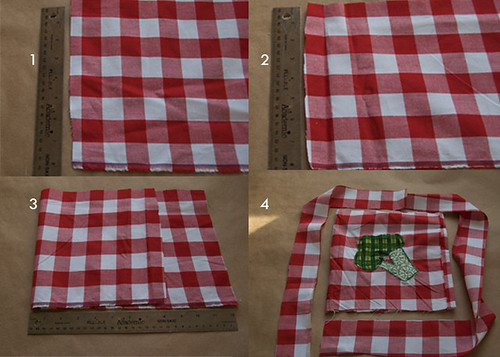
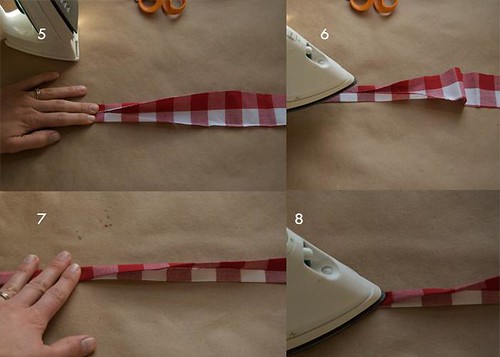
I'll take you through the process step by step. The steps are arranged in groups of four. Each photo illustrating a step has a number which corresponds to a numbered instruction. This is my first sewing tutorial so if you have any questions or feedback, please let me know! Have fun creating!

Materials needed:
sharp scissors
pins
an iron
thread
cotton fabric (a piece at least 8 inches by 20 inches and one or two pieces for the binding which will equal a 3 inch by 30 inch strip)
batting - Do not use synthetic batting as it won't withstand heat. I usually use cotton quilt batting, but this time I used some bamboo fiber stuffing which I bought at a fabric store. There are insulated battings and fabrics, but cotton works just fine for normal everyday use.
potholder-tutorial

1. Measure and cut your fabric.

2. You will be making an 8 inch by 8 inch potholder so the fabric should measure 8 inches by 20 inches.

3. Since it is 8 inches by 20 inches you will fold the fabric over into an 8 inch square with 4 inches left over. The extra four inches will wrap around the batting and overlap with the top fabric.

4. The binding for the potholder will be a thin strip of fabric that goes all the way around the edges with a few extra inches for a loop for hanging. You will need either one piece of 3 inch by 30 inch fabric or two pieces that are equivalent to that length.

Once you have cut the potholder fabric, you can add an appliqued design. Applique is simply attaching fabric (which has been cut into the desired shape) on top of another fabric. I use my machine's zigzag stitch all around the edges of the shape I have cut out to keep it secured to the fabric beneath and keep the edges from fraying. It can be a bit tricky at first to stitch around complicated shapes. Just go slowly and you'll get it with practice.
potholder tutorial2

5. Make the binding tape. Taking your strip of 3 by 30 inch fabric, begin at one end and fold the outer edges into the middle. The cut edges should be facing each other and the outer edges of the strip are now at the folds.

6. Iron the fabric to keep the cut edges folded in. Continue to fold the edges in and iron them until the whole strip (or strips) is folded this way.

7. Fold the folded strip in half so that the cut edges are hidden and the two folded edges meet.

8. Iron the folded strip for a second time so that the previously folded edges meet and the whole strip is folded in half.
potholder tutorial3

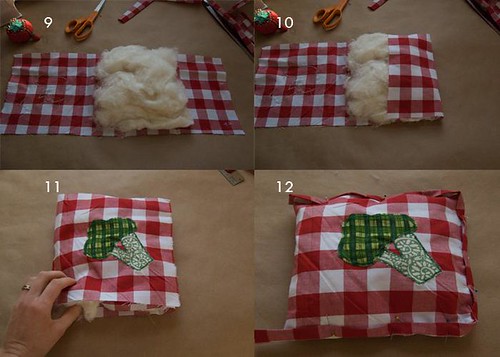
9. Open up the large potholder piece of fabric. Arrange batting on what will become the back of the potholder. This will be an 8 inch square starting 8 inches from one end (this part will be the top) and four inches from the other end (this part will be the overlap). Make sure that the batting reaches the corners and edges of the square (it is okay if it is slightly larger than the 8 inch space). The batting, or stuffing, should be about an inch thick.

10. Fold the 4 inch overlap over the batting.

11. Fold the top over the batting and make sure all of the batting is tucked inside the space of the fabric. You will want the batting to come close to the edge, but it can be a little bit thinner near the edges as the binding will be going around that area.

12. Beginning with the corner that you want the potholder to hang from, pin the binding around the potholder fabric. Unfold the binding slightly and place the top fold on the top of the potholder and the bottom fold on the bottom so that the binding sandwiches the potholder fabric and covers the cut edge of the potholder fabric. Pin through all four layer of fabric to hold it together.
potholder-tutorial4

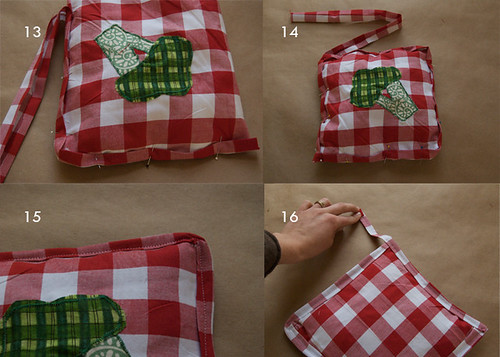
13. Continue pinning the binding all the way around the potholder closing off any open edges of the potholder fabric and making sure that binding covers the cut edges of the potholder. If you are using more than one strip of binding, when you start a new strip, fold over the cut end of the new strip and place it overlapping with the already pinned strip so there are no raw edges.

14. When you have pinned all the way around to where you started, make sure that the raw edge of the the beginning of the binding is covered by the binding as it comes back around. The binding will extend out a few inches from the potholder to become the loop from which to hang it. Note: In the photo my excess binding is much longer than it needs to be.

15. Beginning where you started pinning the binding, sew around the potholder, making sure to sew through the top binding, top of the potholder, bottom of the potholder and bottom binding (which are all pinned together) all the way around.

16. When you reach the end of the binding, continue sewing the binding tape that will become the loop for hanging the potholder. Stitch along until you reach the end of the binding.
potholder-tutorial5

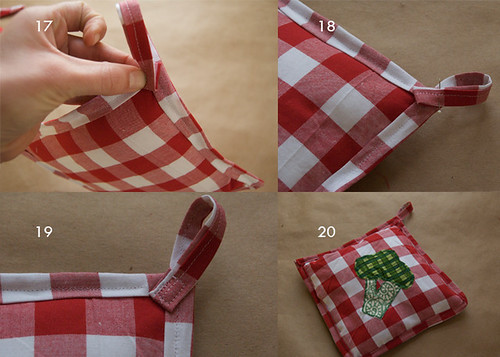
17. Take the binding that will become the loop and fold it in half, tucking under the raw edge, so that it meets the corner of the potholder.

18. Pin the loop in place.

19. Sew around the tucked end of the loop to securely attach it to the potholder and keep the cut end from showing.

20. Your potholder is finished and ready to be used, gifted or hung in your kitchen!

November 9, 2010

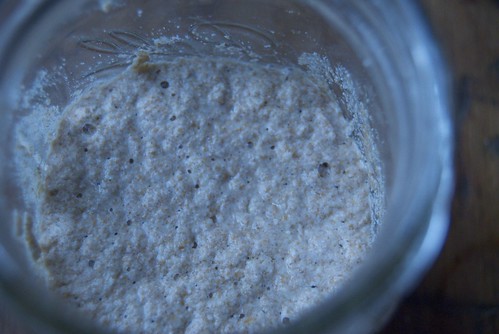
Sourdough Start

Sourdough Bread

I realize that many of my recipes here are based on flour and baking. Even so, I haven't talked much about bread. I've gone through bread baking phases, gradually improving the loaves that I pull out of the oven. I've been wanting to bake with a sourdough starter for quite some time. I took a class a couple of years ago, but just didn't get into the rhythm of baking sourdough. 

This fall I decided I had to get back into it and I have been loving it. I read carefully through the sourdough chapters in the bread books I have (King Arthur Flour Whole Grain Baking Book, The Bread Bible, by Rose Levy Berenbaum, and The Bread Baker's Apprentice by Peter Reinhart) as well as the information that Clotilde has written. With a bit of trepidation I began leaving a jar of flour and water on the counter for the natural yeast to work its magic. Just like any sort of fermentation, I had to wait and hope that the right conditions would provide a bubbling, living starter.

After several days, it was certainly alive. My first few loaves didn't rise much, though, so I put the jar in the fridge and ignored it for a while. The starter needed more time to gain strength and eventually I took it out and fed it daily until I could see it was even more alive and bubbling. Over several hours, the starter would rise up the edge of the jar until it reached its limits and then slowly fall back.

Sourdough Starter

The bread from these loaves was definitely the best that I have made from scratch. The dough starts off stretchy and flexible in a way that is so different from commercial yeast bread. The bread that comes out of the oven is soft and chewy, the crumb holds together and is moist and so flavorful. Its hard not to eat half the loaf when it comes out of the oven.  It isn't sour and, in fact, sourdough is just one of the many names for a natural yeast starter, another one of those ancient accidental discoveries that has been so important to all of baking.

I would love to share a sourdough bread recipe with you, but I'm still getting the hang of it and figuring out what works best. I couldn't help but share my initial success and I strongly encourage you to get a starter going. At first I followed specific directions for feeding the starter but I've gotten a little looser, just discarding part of the old starter and adding what seems like enough flour and water. Miraculously the living yeast does what its supposed to do and with a little guidance and several hours of rising time beautiful bread results. Baking bread creates a gentle rhythm of attention to the dough and long periods of rising, it's a routine that I enjoy including in my week and I am excited to practice and learn more about sourdough.

I was just rereading the introduction to the Bread Bible because I recall reading a passage commenting on how many people have not had the good fortune to taste freshly baked bread (an unfortunate situation which we should try to change). I couldn't find the exact quote but I did reread about how bread baking is an evolving process and many bakers don't even know how the bread will turn out each time. I do like a creative process that doesn't have to be perfect and exact. I will continue to work on this sourdough and eventually I hope to share some recipes here. In the mean time, have you baked any bread lately? Ever? What breads are your favorites?

P.S. I started a facebook page for Seedling Design where I will also post updates from The Road to the Farm. Feel free to check it out.

November 4, 2010

Alive and Ever Changing

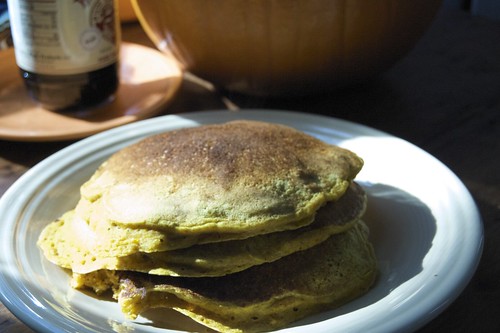
Pumpkin Pecan Pancakes

In my last post, I talked a bit about my kitchen and the simple, every day things that happen there. I'm developing a new relationship with this space where I cook, eat, clean, and create. I've been realizing lately that, for me, a kitchen is a work in progress. At least a couple of times a day, I create a meal there: sometimes simple and quick, sometimes more involved. As much as I like to have a clean and organized kitchen, it seems like there are always dishes being created, containers emptied, and pots and bowls filled. Its not that I don't feel like cleaning or washing up, I just find that almost as soon as I get the counter spotless and the floor swept, I embark on a new project or meal.

Generally I dislike messy or cluttered spaces and I really do love a clean counter, empty sink, and dishes put away. There is always a project or two going on in the kitchen, though, so I've started to view this as something that is alive and ever changing. Just like the jar of sourdough starter on the counter and the gingered carrots fermenting on the shelf, it is a living space. As I clean up my work, I try to keep in mind that creation, not perfection, is the goal.

I like having a space where I can quickly pull together a warm and hearty breakfast without any fuss. On Sunday morning, I made these pancakes and though you might be sick of squash, clearly, I am not. I had to share the recipe since they made for the perfect breakfast on an autumn morning.


Pumpkin Pecan Pancakes
I like to substitute spelt flour in pancakes and muffins since it works just as well as wheat flour for these recipes. If you don't have it (or wheat germ or flax seed meal) you can just use wheat flour. As always, pumpkin somehow sounds better and more delicious, but squash works just as well whether from a can or baked in your oven.

1 cup whole spelt flour
1/2 cup wheat germ or flax seed meal
1 1/2 teaspoon baking powder
1/4 teaspoon baking soda
1/2 teaspoon salt
1/2 teaspoon cinnamon
1/4 teaspoon nutmeg
1/4 teaspoon ground ginger
1 cup mashed pumpkin or  winter squash
1 cup butter milk*
2 eggs
2 tablespoons unsalted butter, melted
1/2 cup chopped pecans


Whisk together flour, wheat germ, baking powder, baking soda, salt and spices. Mix together pumpkin, buttermilk, and eggs until smooth and fully combined.  Pour wet ingredients and melted butter into the flour mixure. Add pecans and stir until just combined (a few lumps are okay). Heat a large skillet over medium heat and add a bit of butter (or nonstick spray) to the pan. Pour in 1/3-1/2 cup batter (depending on how large you want to make the pancakes). When the small bubbles appear on top of the pancake and stay that way, flip the pancake and cook for a minute or two on the other side. Serve hot with your favorite pancake toppings. Makes 6-8 pancakes (depending on their size)

* or one cup milk with a tablespoon of vinegar stirred in.