March 31, 2010
San Francisco and Beyond
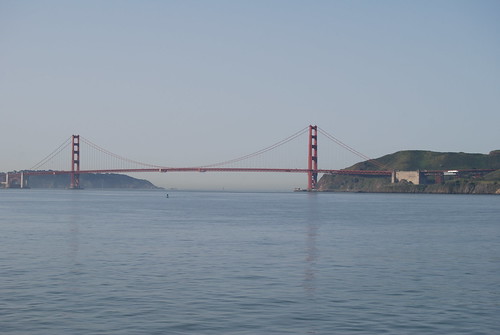
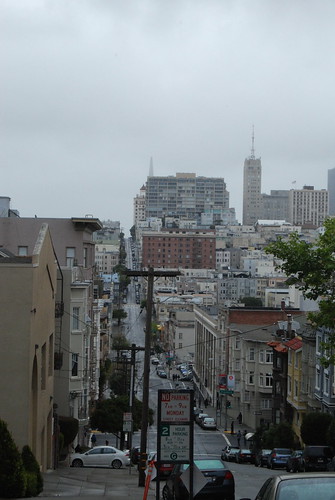
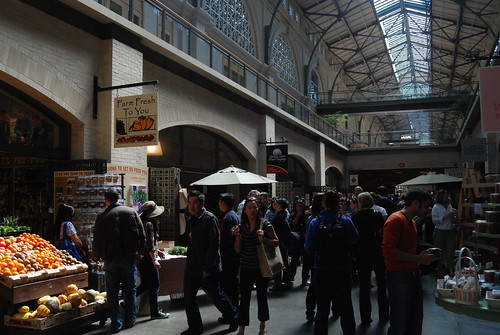
Thanks for your comments and observations on our little city and home. The traveling portion of this year has begun, for Ray and I. We just spent a week exploring San Francisco. Eating lots of great food, walking all over the city, crossing bridges, sitting in cafes, visiting my sister Caroline and also seeing friends. It was a very full week and I'm grateful to have the chance to explore a city that I don't know very well. In a couple of days we will get on another plane to Costa Rica where we will be for six weeks volunteering and exploring a new part of the world.
After eating many wonderful restaurant meals last week, I found myself in a bookstore admiring books on food and cooking which reminded of how very much I love to cook and grow and create. Traveling opens my senses to new tastes, ideas, languages and creative possibilities. I will be back here to share these sometime in May. Until then, we hope to occasionally share some stories of our time in Costa Rica over at our travel blog. Feel free to check it out and until I see you again here, safe journeys.
March 20, 2010
Portland, Maine
I've been wanting to write this post for a long time. At first, the idea was to show those of you who live far away, or have never been here, the wonderful city of Portland, Maine. I have lived here for the past five years and have spent a lot of my life near Portland, so it feels like home to me. Now that Ray and I are leaving the area to travel for a couple of months and then to live far away for an undetermined amount of time, I wanted to share with you this place that has come to mean so much to me.
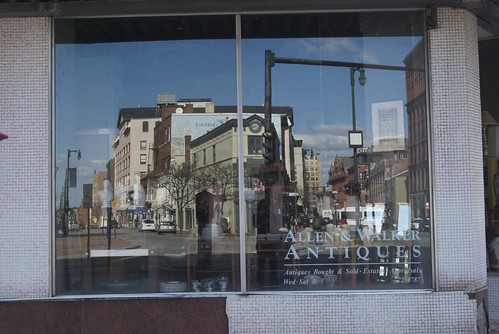
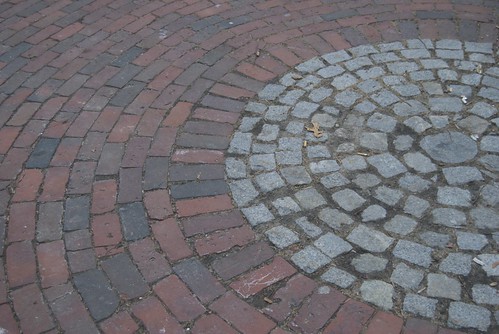
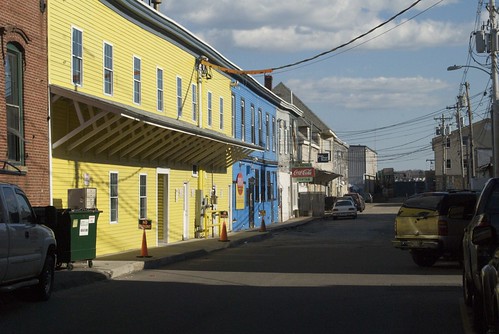
I often wonder what it is to love a place. A small city lined with brick sidewalks and cobblestones scattered here and there. Downtown shows off unique old buildings, once part of the trade and commerce of the port for which the city was named. Now these brick facades house different businesses, places to eat and many locally owned shops. Aside from an excessive number of Dunkin Donuts (I shudder to type that name) and Starbucks, the majority of the restaurants and stores on Portland's peninsula are locally owned. I like to sit and read or write at Arabica and Bard Coffee, browse and buy reading and learning material at Longfellow Books and Rabelais, and buy thread and peruse new prints at Z Fabric. These local businesses are supported by people who care about their community as well as Portland Buy Local, which was formed a few years ago to more formally organize and continue to support the many fabulous local businesses around town.
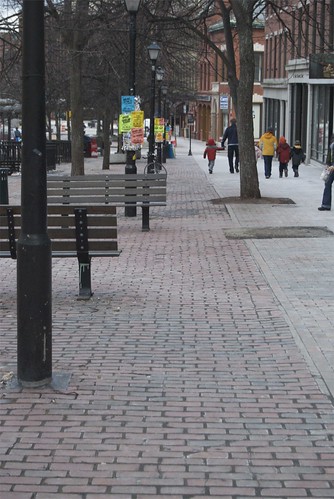

I thrive living in a place where I travel by foot from the east to the west end in under an hour. When I worked on Exchange Street I rarely had to get in the car and would walk or pedal to work every day. In the past five years, I have spent so much time along these sidewalks. Striding purposefully, ambling along in the sun, searching for answers between every brick or just trying not to slip on the ice. I sometimes forget to really notice the historic brick buildings and the small details, a name, a pattern or element of design which is unique. When I really look around though, I always discover something new, a unique house or an unnoticed name and date on a building (like Walk Over Shoe on Congress Street), that I have never seen before. If I haven't walked around town in a while, I feel the need to reconnect with the sights, sounds, and tastes of the streets as my feet reconnect with the brick sidewalks.
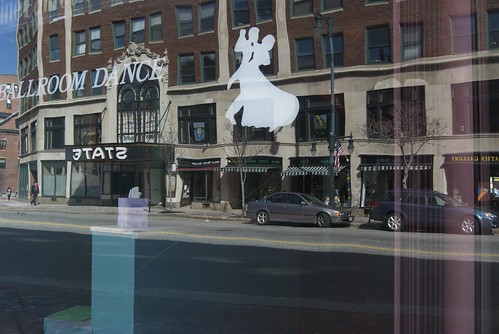
A city is, of course, more than just its buildings. I always wonder, what makes this place what it is? What makes it home to me? It is more than the abundance of restaurants that are always serving great food, often centered around what is available locally and sustainably. It is more than the cornucopia of locally grown and produced foods available here, even more than weekly trips to the farmer's market or walking by a bakery and stopping for a treat. I admire the culture of food that keeps growing in Portland, and try to participate by eating and making. I find secret delight in the the sweet-burnt aroma of coffee roasting that permeates the air most mornings and the smell of grains brewing into beer which hangs on the breeze later in the day. When I'm not making food in my own kitchen, I love to taste well crafted vegetarian food at the Pepper Club and the Green Elephant, chocolate truffles from Dean's Sweets and pastries from Standard Baking, pizza from Flatbread and Micucci's, italian food from Paciarino, mexican food from El Rayo, beer from Novare Res and lots of local breweries, and to visit delicious places in the west end like Caiola's and Aurora Provisions. There are so many other good places this list is just a start.

I don't know if it is possible to belong to a place. What ties me to it, or it to me? There are all the faces that I recognize and see over and over. Whether or not I know them beyond the surface, these faces are part of the mosaic of my life here. From time to time, someone asks me why I look so familiar. How do they know me? It could be from the Yoga Exchange, Maples, the community garden, or O'Naturals. But I tell them: we live in Portland, that's how. Its the small town phenomenon of this small city -- I see familiar faces everywhere. Beyond just familiar faces, there are the dear friends with whom I have shared so many experiences here.
What else is great about Portland? The First Friday Art Walk, the museums and galleries, creative people and projects happening everywhere. In the summer, the sweet salty smell of the harbor and Casco Bay permeates. Being close to the water, lighthouses, beaches and islands as well as a short drive from rivers, lakes and mountains. Good people who care about the place where they live. Obviously I am just one person out of 60,000 and these are my impressions and the things that come to mind first when I think about my life here.
After slowly falling for Portland, I have more recently found that no place can be my home without Ray. We were lucky to find each other in the same place at the same time and to share a love for our little city. After having our individual experiences here, we have explored Portland together and found that, just as in our relationship, the whole is greater than the sum of its parts. Of course, no matter how much you love a place, there are so many others to experience and love. So we're leaving. Mainly because Ray has a new job which gives us a chance to experience a new city and part of the country. I will seriously miss each season here, watching the color and texture of the water change each day, walking along well trodden streets and all of the familiar faces. But, eventually, we'll be back.
I often wonder what it is to love a place. A small city lined with brick sidewalks and cobblestones scattered here and there. Downtown shows off unique old buildings, once part of the trade and commerce of the port for which the city was named. Now these brick facades house different businesses, places to eat and many locally owned shops. Aside from an excessive number of Dunkin Donuts (I shudder to type that name) and Starbucks, the majority of the restaurants and stores on Portland's peninsula are locally owned. I like to sit and read or write at Arabica and Bard Coffee, browse and buy reading and learning material at Longfellow Books and Rabelais, and buy thread and peruse new prints at Z Fabric. These local businesses are supported by people who care about their community as well as Portland Buy Local, which was formed a few years ago to more formally organize and continue to support the many fabulous local businesses around town.


I thrive living in a place where I travel by foot from the east to the west end in under an hour. When I worked on Exchange Street I rarely had to get in the car and would walk or pedal to work every day. In the past five years, I have spent so much time along these sidewalks. Striding purposefully, ambling along in the sun, searching for answers between every brick or just trying not to slip on the ice. I sometimes forget to really notice the historic brick buildings and the small details, a name, a pattern or element of design which is unique. When I really look around though, I always discover something new, a unique house or an unnoticed name and date on a building (like Walk Over Shoe on Congress Street), that I have never seen before. If I haven't walked around town in a while, I feel the need to reconnect with the sights, sounds, and tastes of the streets as my feet reconnect with the brick sidewalks.
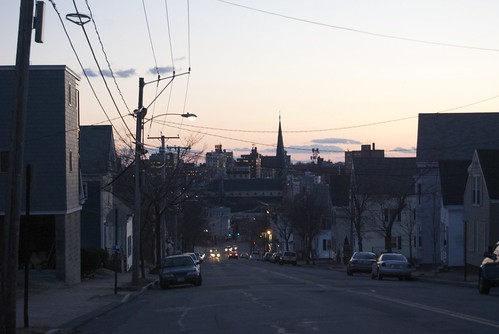
A city is, of course, more than just its buildings. I always wonder, what makes this place what it is? What makes it home to me? It is more than the abundance of restaurants that are always serving great food, often centered around what is available locally and sustainably. It is more than the cornucopia of locally grown and produced foods available here, even more than weekly trips to the farmer's market or walking by a bakery and stopping for a treat. I admire the culture of food that keeps growing in Portland, and try to participate by eating and making. I find secret delight in the the sweet-burnt aroma of coffee roasting that permeates the air most mornings and the smell of grains brewing into beer which hangs on the breeze later in the day. When I'm not making food in my own kitchen, I love to taste well crafted vegetarian food at the Pepper Club and the Green Elephant, chocolate truffles from Dean's Sweets and pastries from Standard Baking, pizza from Flatbread and Micucci's, italian food from Paciarino, mexican food from El Rayo, beer from Novare Res and lots of local breweries, and to visit delicious places in the west end like Caiola's and Aurora Provisions. There are so many other good places this list is just a start.
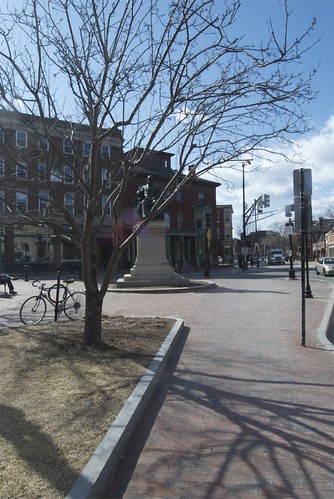
I don't know if it is possible to belong to a place. What ties me to it, or it to me? There are all the faces that I recognize and see over and over. Whether or not I know them beyond the surface, these faces are part of the mosaic of my life here. From time to time, someone asks me why I look so familiar. How do they know me? It could be from the Yoga Exchange, Maples, the community garden, or O'Naturals. But I tell them: we live in Portland, that's how. Its the small town phenomenon of this small city -- I see familiar faces everywhere. Beyond just familiar faces, there are the dear friends with whom I have shared so many experiences here.
What else is great about Portland? The First Friday Art Walk, the museums and galleries, creative people and projects happening everywhere. In the summer, the sweet salty smell of the harbor and Casco Bay permeates. Being close to the water, lighthouses, beaches and islands as well as a short drive from rivers, lakes and mountains. Good people who care about the place where they live. Obviously I am just one person out of 60,000 and these are my impressions and the things that come to mind first when I think about my life here.

After slowly falling for Portland, I have more recently found that no place can be my home without Ray. We were lucky to find each other in the same place at the same time and to share a love for our little city. After having our individual experiences here, we have explored Portland together and found that, just as in our relationship, the whole is greater than the sum of its parts. Of course, no matter how much you love a place, there are so many others to experience and love. So we're leaving. Mainly because Ray has a new job which gives us a chance to experience a new city and part of the country. I will seriously miss each season here, watching the color and texture of the water change each day, walking along well trodden streets and all of the familiar faces. But, eventually, we'll be back.
March 14, 2010
Whole Grain Pancakes
It seems like everyone is talking about spring and noticing the signs. I've seen trees covered in little buds getting ready for leaves to burst out, when the time comes. The season is beginning to change, but the wind today made me wish I hadn't left the house without a scarf and it nearly knocked me over as I rounded a corner. I think spring is a season for impatience. Everyone wants sun, soft breezes and green grass, but we mostly get mud. This is the time of year to think about growth, new life and digging in soil. I, of course, am getting ready for big changes but as I go through old letters and wrap up dishes the season seems more autumnal and contemplative than the loud leaping of spring.
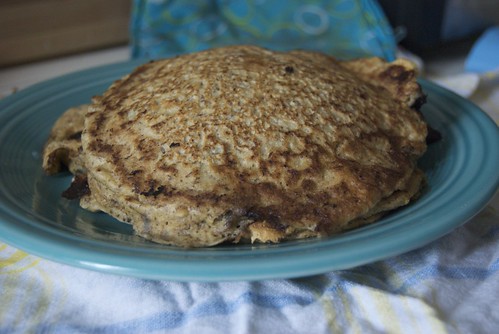
As I navigate my way around packed boxes and others waiting to be filled, I have been obsessively trying to use up as much of the food in my pantry and freezer as possible. The past couple of weeks have been a great game of how to creatively use up all of the odds and ends. This morning, in what was probably the last meal at our dear apartment, I went back to the old standby of my favorite pancakes.
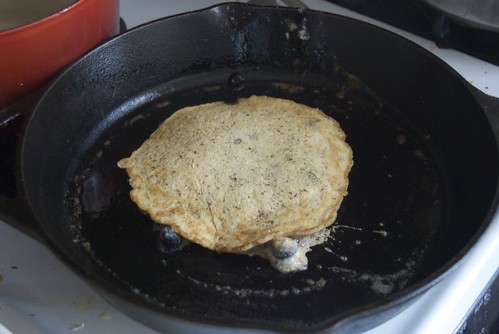
I have made a lot of pancakes over the last several years. I usually make them in the big cast iron skillet that Ray bought when we were first dating and which I use for sauteeing, stir-frying, and cooking at least half of our meals. A hot breakfast, given a little more time than normal, can be a special treat even on a work day morning. I suspect you, also, have made many pancakes, but I realize that a lot of people don't know just how easy it is to mix up flours and pour in milk and eggs all of which will soon be transformed into tender, sweet, steaming hot cakes. While a pancake mix would provide the same pleasurable hot cake experience, I love the flexibility and possibilities of making them from scratch.
I use a mix of mostly whole-grain flours which varies each time I stir them together depending on what is in the cupboard. I love to add fruit to my pancakes, usually blueberries that I picked and froze over the summer. Frozen fruit is really easy to add, but sliced apples or bananas work really well, too. In my experience, pancake batter is really forgiving and its the kind of thing you can toss together while half asleep and, if you want, not wake up til you take the first bite.
P.S. I am sorry for the lack of Slow posts, the past few weeks have been a really busy time. We will be traveling for all of April and most of May, but they will be back after that!
Whole Grain Pancakes
adapted from Sunlight Cafe by Mollie Katzen
I usually use whole wheat pastry flour as the base, but if I am out, I like to use a mixture of 2 parts whole wheat flour and 1 part white flour. Along with the wheat flour, I add another type of whole grain flour or meal: flax seed meal, wheat germ, oats*, corn meal -- experiment with the grains and proportions and see which you like best. Use any fruit you like, just make sure it is in small enough pieces to evenly distribute on the pancakes. Frozen fruit does not need to thaw before adding.
1 cup whole wheat pastry flour
1/2 cup other whole grain flour or meal (lately I have loved the texture and flavor of flax seed meal)
1 1/2 teaspoons of baking powder
1/8 teaspoon baking soda
1/2 teaspoon salt
1/2 teaspoon cinnamon
1 1/3 cups buttermilk (see below for a substitution for this)
2 large eggs
2 tablespoons melted butter
Fruit, optional
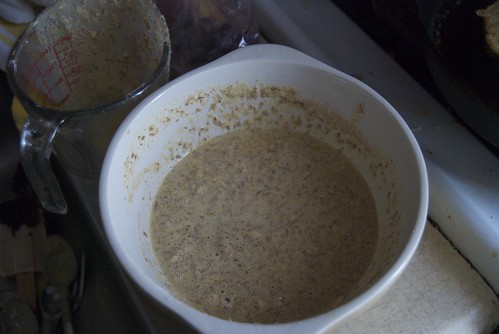
Place a large skillet over medium heat. In a medium bowl, mix together flours, baking powder, baking soda, salt and cinnamon. Measure out buttermilk in a two cup measure. Add eggs and beat with a fork to combine. Pour milk and eggs as well as the melted butter into the dry ingredients. Stir to combine, its okay if there are a few lumps. When the skillet is heated, add butter or non-stick spray to grease the pan. Pour in 1/4 to 1/3 cup of batter. Sprinkle fruit on the batter, if using. When small bubbles form and stay on the top of the pancake, flip it. Let it cook for another couple of minutes. Keep each pancake warm in the oven until all are made, or eat them as soon as they come off the griddle. They go especially well with real maple syrup, yogurt or more fruit. If you don't use all the batter at once, keep it in an airtight container in the fridge for two or three days (just stir it up when you are ready to use it).
Makes about 5 five-inch pancakes.
If you don't have buttermilk (I rarely do) simply stir in 1 tablespoon of vinegar into the milk and let stand for a few minutes.
*If you are using oats, let them soak in the milk for 15 minutes before mixing everything together.
March 8, 2010
Nearly Spring
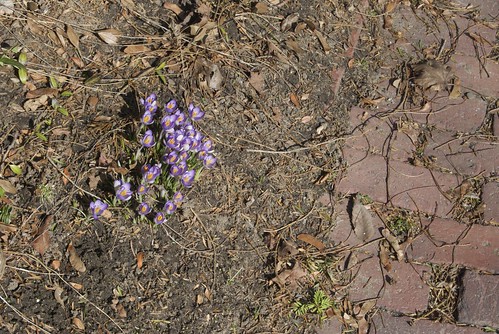
Its early March and in Maine that means one thing: spring is not here yet. I can say that the weather has been amazingly spring-like and that I have been soaking in the feeling of warm sun on my back. I even walked barefoot across a stretch of grass the other afternoon. But no, spring is not here. The birds have been chirping with greater enthusiasm and the sun is up earlier, casting a gentle golden light each morning. I have seen crocuses and green shoots poking out of the ground. But, I'll say it again: spring is not here. In a normal year, we would be shuffling past days of continued cold, sometimes gray, and often early March snow storms. This winter was so mild, its hard to know what spring will bring... when it arrives, that is.
The past few days have felt like April, when we can hope that winter has blown away for the year, but even then we are not necessarily safe from another whirling of snow. Again, I must remind myself that it is not yet spring. Whatever this season is, I am enjoying long warm walks, cooking and baking next to an open kitchen window, and the light that arrives earlier and stays later every day.
Despite the warmer weather, I discovered a bag of frozen corn that I scraped off the cob in August and that I needed to use up before we move away from our freezer and our apartment next week. I decided to use it for a recipe that is sweet and warm like the first spring-like days but that is best made in August or September when all of the ingredients can be found fresh at the farmer's market. Its a Potato, Leek and Corn soup, or maybe chowder if chowder means it has potatoes and milk (my brief googling of chowder did not produce a solid definition). It is by far the best when made with corn cut off the cob along with the milky scrapings of the corn cob. If you don't have sweet tender corn like this, you could leave out the corn and make it a potato leek soup.
This soup is so comforting and warm for a day that feels like spring, but is still part of winter. I love the softness of the potatoes, the sweetness of the corn and the gentle flavor of the leeks. This is not a thick, overly-creamy soup. I add some milk to the broth to make a lightly creamy soup. I like the contrast of the potato chunks and milky broth -- you could puree some of the potatoes for something thicker, but I will keep mine simple.
Potato, Leek, and Corn Soup
If you don't have sweet tender corn available I recommend increasing the amount of potatoes and leeks (two more potatoes and another small leek). I haven't tried it with regular frozen corn, but if its still fairly tender and somewhat juicy it might just add the sweetness that is so delightful about this soup.
1 tablespoon butter
1 medium sized leek
4 medium sized potatoes (ideally soft skinned, not a russet-type)
Water, or vegetable broth
2 cups of corn (ideally from corn that is freshly cut off the cob with its juices)
1 1/2 cups milk (whatever % you have, or cream for something a little thicker and richer)
Salt and pepper to taste
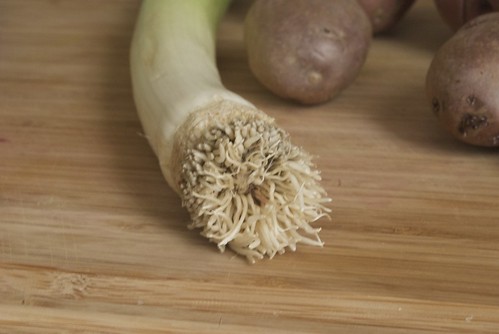
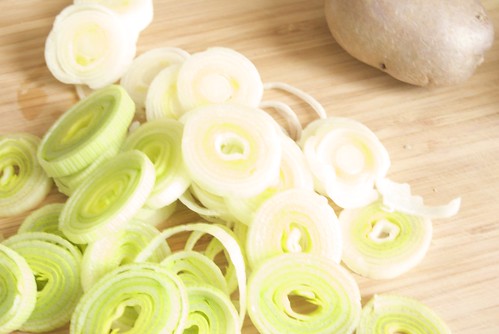
Place a large sauce pan, or pot (I used a 3 1/2 quart pot) over medium to low heat. Add the butter and let it melt. While the pan is heating and butter melting, slice the leek: cut off the root and and chop the stem into 1/4 inch thick rounds all the way up into the green part, stopping a few inch from the end of the stem or where the leaves branch out (I save whatever is left for making vegetable stock). Once the butter is melted, add the sliced leek rounds to the pot and let them cook slowly until they are transparent and soft, about 5 minutes. While the leeks are cooking, chop the potatoes. I leave the skins on (after giving them a quick scrub), but if you prefer you can peel them. Cut them into bite sized chunks, or slightly larger. When the leeks are ready, add the potatoes and stir them around for a minute or two. Add water (or vegetable broth) to just cover the potatoes. Raise the heat to medium and let the potatoes cook until they are soft when pierced with a fork. Add the corn and milk and the salt and pepper to taste. Let the soup simmer very gently for 15 or 20 minutes. Adjust the seasonings to taste and serve immediately or reheat later.
The past few days have felt like April, when we can hope that winter has blown away for the year, but even then we are not necessarily safe from another whirling of snow. Again, I must remind myself that it is not yet spring. Whatever this season is, I am enjoying long warm walks, cooking and baking next to an open kitchen window, and the light that arrives earlier and stays later every day.
Despite the warmer weather, I discovered a bag of frozen corn that I scraped off the cob in August and that I needed to use up before we move away from our freezer and our apartment next week. I decided to use it for a recipe that is sweet and warm like the first spring-like days but that is best made in August or September when all of the ingredients can be found fresh at the farmer's market. Its a Potato, Leek and Corn soup, or maybe chowder if chowder means it has potatoes and milk (my brief googling of chowder did not produce a solid definition). It is by far the best when made with corn cut off the cob along with the milky scrapings of the corn cob. If you don't have sweet tender corn like this, you could leave out the corn and make it a potato leek soup.
This soup is so comforting and warm for a day that feels like spring, but is still part of winter. I love the softness of the potatoes, the sweetness of the corn and the gentle flavor of the leeks. This is not a thick, overly-creamy soup. I add some milk to the broth to make a lightly creamy soup. I like the contrast of the potato chunks and milky broth -- you could puree some of the potatoes for something thicker, but I will keep mine simple.
Potato, Leek, and Corn Soup
If you don't have sweet tender corn available I recommend increasing the amount of potatoes and leeks (two more potatoes and another small leek). I haven't tried it with regular frozen corn, but if its still fairly tender and somewhat juicy it might just add the sweetness that is so delightful about this soup.
1 tablespoon butter
1 medium sized leek
4 medium sized potatoes (ideally soft skinned, not a russet-type)
Water, or vegetable broth
2 cups of corn (ideally from corn that is freshly cut off the cob with its juices)
1 1/2 cups milk (whatever % you have, or cream for something a little thicker and richer)
Salt and pepper to taste
Place a large sauce pan, or pot (I used a 3 1/2 quart pot) over medium to low heat. Add the butter and let it melt. While the pan is heating and butter melting, slice the leek: cut off the root and and chop the stem into 1/4 inch thick rounds all the way up into the green part, stopping a few inch from the end of the stem or where the leaves branch out (I save whatever is left for making vegetable stock). Once the butter is melted, add the sliced leek rounds to the pot and let them cook slowly until they are transparent and soft, about 5 minutes. While the leeks are cooking, chop the potatoes. I leave the skins on (after giving them a quick scrub), but if you prefer you can peel them. Cut them into bite sized chunks, or slightly larger. When the leeks are ready, add the potatoes and stir them around for a minute or two. Add water (or vegetable broth) to just cover the potatoes. Raise the heat to medium and let the potatoes cook until they are soft when pierced with a fork. Add the corn and milk and the salt and pepper to taste. Let the soup simmer very gently for 15 or 20 minutes. Adjust the seasonings to taste and serve immediately or reheat later.
March 1, 2010
Treasures
I stumbled upon this blog, Zero Waste Home, as I began gathering boxes, cleaning out and packing up the large and sometimes disorganized closets of my apartment. I truly do aspire to have zero waste and I am really interested to read about someone else who is pretty much there. In permaculture, everything that might seem to be wasted can and should be used for some other purpose. A simple example of how this works is composting, where inedible food scraps are turned into a valuable resource for growing more food. Along with making sure that potential waste is recycled into something useful, Bea continually advocates refusing things you don't need so that they don't become something that you have to recycle and reuse or worse: another piece of trash.
I tend to wait before purchasing things that I think I want, which is a good way to keep from accumulating lots of things that I really don't want or need. But when I start packing my apartment, it makes me scrutinize all the things that normally sit quietly on the shelves and walls. Do I really need this? Moving and packing makes me think about what I have, what I use, what I save and why I save it. While they may weigh me down a bit, most of my books will be packed and hauled to our next place as well as everything we use in the kitchen. In fact, most of the things we have in our apartment are carefully chosen and kept because they are useful, interesting or carry a significance or sentimental value.
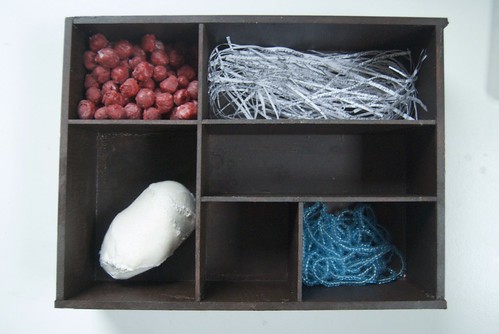
Then, as I fill cardboard boxes, I wonder how valuable sentiment is. I have a stack of little treasure boxes that I have moved with me several times. Each one holds small mementos from different experiences I have had: photographs I took and printed myself in Italy, rocks from the shores of Lake Champlain, a pile of postcards I made in college and another pile of postcards I have collected over many years. I don't look at these things often and I wonder if I really need to carry them from place to place as I do with journals I have kept since high school. Will I be thrilled to read through them years from now and remember different small moments of my past? Or will I realize that there really isn't much of interest in those scribbled pages and wish that I hadn't clung to something so insignificant? Lately I have been posing the question: What is one thing you wish you hadn't gotten rid of (even if you recycled it!) and what is one thing you wish you could stop holding onto?
As someone who is fueled by creating and making things, I wonder when to let go. I enjoy making things that have a purpose, but I have also done plenty of making for the sake of creative exploration. I made this box a few years ago as an exploration of memory and, perhaps, sentimentality. But what am I to do with it now?
Walnut Jam Muffins
Adapted from Smitten Kitchen. Feel free to use whatever kind of jam you like.
Makes 12 small-ish muffins
2 cups walnuts, toasted at 350 for 10 minutes and cooled.
3/4 cup sugar
1 1/2 sticks unsalted butter, cut into smaller peices
6 large eggs
1 teaspoon vanilla
3/4 cup flour
3/4 teaspoon baking powder
3/4 teaspoon salt
1/4 cup jam (I used raspberry)
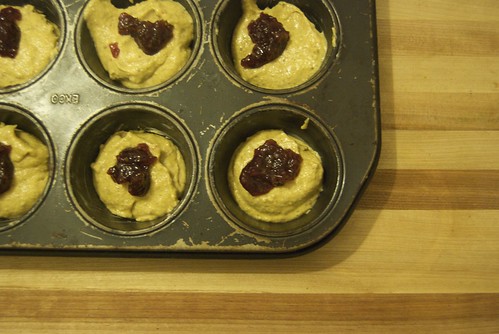
Preheat the oven to 350 degrees. Prepare the muffin tin (you can use paper muffin cups or grease the tin with butter). In the bowl of a food processor, pulse the walnuts and sugar until evenly mixed and finely chopped. Add the butter chunks and process until combined, then add eggs and vanilla and mix until smooth. Measure out the flour, baking powder, and salt and whisk to combine. Add the flour mixture to the food processor and pulse until just combined. Spoon the batter into the muffin tins, filling them just half way. Place one teaspoon of jam in the center of each cup of batter. Spoon the rest of the batter on top of each teaspoon of jam, filling the cups until they are level with the top of each cup (make sure to portion the batter so there in enough for all of the muffins). Bake for 20-25 minutes or until the muffins spring back when gently poked with your finger. Let cool and enjoy!
I tend to wait before purchasing things that I think I want, which is a good way to keep from accumulating lots of things that I really don't want or need. But when I start packing my apartment, it makes me scrutinize all the things that normally sit quietly on the shelves and walls. Do I really need this? Moving and packing makes me think about what I have, what I use, what I save and why I save it. While they may weigh me down a bit, most of my books will be packed and hauled to our next place as well as everything we use in the kitchen. In fact, most of the things we have in our apartment are carefully chosen and kept because they are useful, interesting or carry a significance or sentimental value.
Then, as I fill cardboard boxes, I wonder how valuable sentiment is. I have a stack of little treasure boxes that I have moved with me several times. Each one holds small mementos from different experiences I have had: photographs I took and printed myself in Italy, rocks from the shores of Lake Champlain, a pile of postcards I made in college and another pile of postcards I have collected over many years. I don't look at these things often and I wonder if I really need to carry them from place to place as I do with journals I have kept since high school. Will I be thrilled to read through them years from now and remember different small moments of my past? Or will I realize that there really isn't much of interest in those scribbled pages and wish that I hadn't clung to something so insignificant? Lately I have been posing the question: What is one thing you wish you hadn't gotten rid of (even if you recycled it!) and what is one thing you wish you could stop holding onto?
As someone who is fueled by creating and making things, I wonder when to let go. I enjoy making things that have a purpose, but I have also done plenty of making for the sake of creative exploration. I made this box a few years ago as an exploration of memory and, perhaps, sentimentality. But what am I to do with it now?
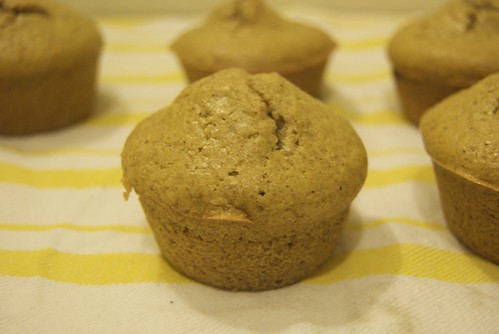
I will continue to ponder these thoughts as I pack up. Meanwhile, I will leave you with a recipe for a muffin, filled with buried treasure, that won't be around for long, even if you wish you could keep them. They are a variation on this simple cake which has a wonderful texture and flavor, delightfully covered with jam and whipped cream. I encourage you to try the cake, but the muffins are also a nice treat. They are slightly less sweet and I used a raspberry jam with no added sugar, so you don't have to eat cake for breakfast if you don't want to. 

Walnut Jam Muffins
Adapted from Smitten Kitchen. Feel free to use whatever kind of jam you like.
Makes 12 small-ish muffins
2 cups walnuts, toasted at 350 for 10 minutes and cooled.
3/4 cup sugar
1 1/2 sticks unsalted butter, cut into smaller peices
6 large eggs
1 teaspoon vanilla
3/4 cup flour
3/4 teaspoon baking powder
3/4 teaspoon salt
1/4 cup jam (I used raspberry)
Preheat the oven to 350 degrees. Prepare the muffin tin (you can use paper muffin cups or grease the tin with butter). In the bowl of a food processor, pulse the walnuts and sugar until evenly mixed and finely chopped. Add the butter chunks and process until combined, then add eggs and vanilla and mix until smooth. Measure out the flour, baking powder, and salt and whisk to combine. Add the flour mixture to the food processor and pulse until just combined. Spoon the batter into the muffin tins, filling them just half way. Place one teaspoon of jam in the center of each cup of batter. Spoon the rest of the batter on top of each teaspoon of jam, filling the cups until they are level with the top of each cup (make sure to portion the batter so there in enough for all of the muffins). Bake for 20-25 minutes or until the muffins spring back when gently poked with your finger. Let cool and enjoy!
February 25, 2010
Pockets
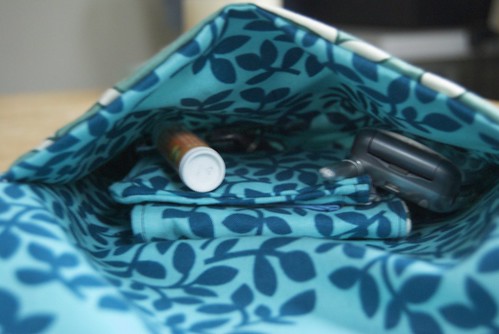
Simple sewing projects can be so rewarding. Especially when they allow me to solve a problem with my own creativity. I have a few different bags that I carry with me to work or when I am out and about. I like to bring a book, maybe my journal, sometimes an additional layer of clothing, and a travel mug. The bag needs to have enough space to accommodate these things, but I don't always use the same bag and sometimes I would rather not carry a bag at all. Still, I have a few essentials that I bring everywhere: my wallet, keys, usually lip balm and most often a cell phone. It is annoying to have to shuffle these items from bag to bag and pocket to pocket. I often absentmindedly stash them in different pockets of a bag or coat or leave them among the other items and debris.
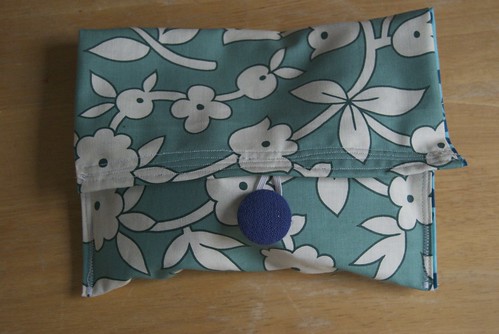
For a long time I have been meaning to solve this problem and finally, the other day, I made a little bag for stashing all of my essentials. Some might call this a purse, when I showed it to Ray he said it was a tool bag, but whatever it is called, it has, in a day or two, proven to be quite useful.
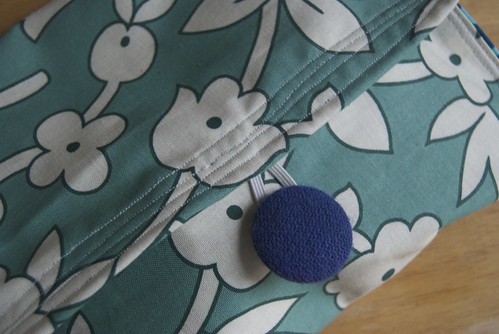
It was really simple to sew: two peices, sewn right sides together and turned inside out. I determined the best pocket to cover ratio and sewed up the sides. I almost didn't put a button on it because I wanted it to be really simple, but I'm glad I put the button and elastic tie on so that nothing slips out while its shuffling around in my bag.
For a long time I have been meaning to solve this problem and finally, the other day, I made a little bag for stashing all of my essentials. Some might call this a purse, when I showed it to Ray he said it was a tool bag, but whatever it is called, it has, in a day or two, proven to be quite useful.
It was really simple to sew: two peices, sewn right sides together and turned inside out. I determined the best pocket to cover ratio and sewed up the sides. I almost didn't put a button on it because I wanted it to be really simple, but I'm glad I put the button and elastic tie on so that nothing slips out while its shuffling around in my bag.
February 22, 2010
Sprouts and Roots
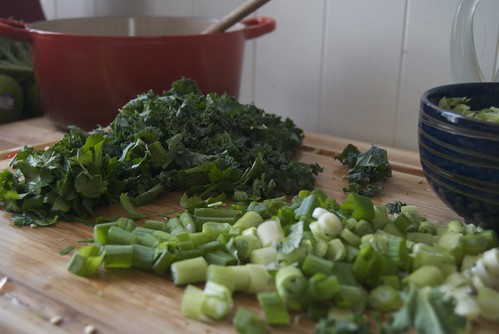
I've been working on some recipes to share here, but in the past week I haven't come up with any that I am totally happy with. As I made dinner the other night, I thought about the ingredients I was using. Some of the vegetables were from California or another all-to-distant growing climate. I was heartened to realize, though, that an equal number of ingredients were grown locally and stored in my pantry or freezer until I used them for dinner. I am disappointed that I have yet to make a full commitment to eating locally, but I delight in the local ingredients that I use. So, I played a bit with photographing the ingredients and taking inventory of what went into the meal.
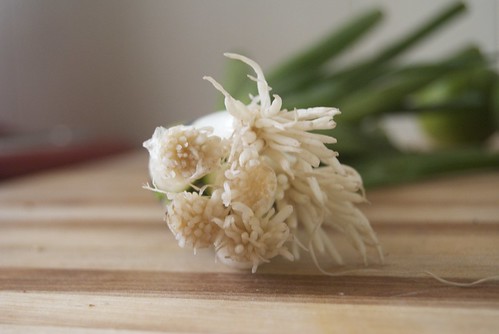
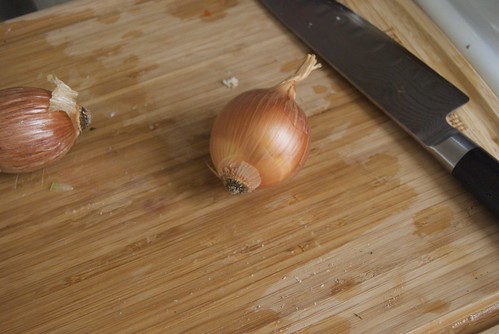
Scallions grown in California; onions from Maine (which makes me wonder, why do I need the scallions if I have locally grown onions? This time of year, fresh green veggies can be too tempting!)
A pot of enchilada sauce made with tomatoes I picked up from the farmer's market and canned in my kitchen with vegetables from the supermarket. A bowl of zucchini from a green baseball bat rescued from the garden, shredded and frozen (great for using in bread, cake, lasagna, stuffing my enchiladas).We are lucky to have Maine grown grains, beans, eggs, milk, cheese and other locally made foods that can be found even when nothing is growing outside. The weather here has felt on the cusp of spring, but I know it has been a deceptively mild winter. I'm sure we still have weeks until anything green begins to sprout from the ground. Still, its the beginning of that time for thinking about when the frozen ground will thaw and the time for planting and harvesting will begin again.
I have received a number of seed catalogs in the mail but this year I am putting them aside. Its not that I don't want to plant another garden, but instead of starting seeds for planting this spring, we are preparing to pull up our roots. Not pull up entirely, I think our roots will always be here. We're just testing other soils for a while though I plan to come back to Maine to plant many more gardens. We are collecting boxes and will be moving out of our apartment in a little less than a month. This makes for a crazy time as we pack up and prepare for several weeks of travel. After traveling we will return to Maine for a couple of months before we move to the Mid-West, where Ray has taken a job.
What are your favorite local foods this time of year?
Subscribe to:
Posts (Atom)