
On one of the last days of 2009, or maybe an early day in 2010, I heard a short piece on NPR about the last decade's food trends. The host of All Things Considered was chatting with an expert on what foods are popular and, aside from the ham sandwich which he said has been and will continue to be a staple for most people in the United States, the biggest edible trend in the last decade was yogurt. In a cup, a tube, or a bottle; with fruit on the bottom, mixed throughout, or just flavored; Greek, Icelandic, French; goat, soy, sheep, or coconut milk; for breakfast, lunch, and maybe dinner. Yogurt comes in a ridiculous number of manifestations and plastic packages. Honestly, its not a very exciting topic of conversation, especially when you picture all of those cups and tubs lined up under the supermarket's fluorescent glow.
These days, if I am in the supermarket, I usually breeze by that collection of colors, flavors, and thicknesses, I just grab a bottle of milk and continue on my way. Yogurt is a staple of my kitchen: sometimes I use it in cooking and baking and I look forward to eating for breakfast with granola and a bit of maple syrup. For the past few months I have been regularly making my own yogurt and for me, this is where the mundane discussion of yogurt gets exciting. Before I tell you how I have been doing this, let me tell you why I think you should join me in making your own yogurt instead of buying it at the store.
First, its economical. For less than the cost of a quart of plain yogurt I can buy a half gallon of milk (from cows that live about 7 miles from me) and make two quarts of yogurt. This alludes to another reason for make yogurt: I can buy local milk, I can buy organic milk and I can be as informed as I want to be about where the milk comes from, whereas when I buy a plastic tub of yogurt from a national brand I can't always be sure of its sources. When I make my own yogurt, I can avoid all of the sticky, sugary, gelatinous additives that are often mixed into what is a supposedly healthy food and I can add to it whatever flavors, fruits or sweeteners strike my fancy.
There are several really good locally made yogurts that I could buy, but beyond the idea of knowing what is in my food and where it comes from, but I really love knowing how it is made and that I don't have to rely on someone else to make it for me. Of course, I don't have my own cow yet and its not practical to make absolutely everything yourself, but this is one small thing that I can do. Even though its just a weekly routine, making yogurt is part of the process of slowing down and enjoying a very small luxury. Aside from the various health benefits of yogurt and cultured foods, by taking the time to do this, I am making a point of being involved in what I eat and thus taking good care of myself in a small way.
Another reason that I like making my own yogurt is that is cuts down on waste. I almost always buy milk from a local farm in returnable/reusable glass bottles so for two quarts of yogurt the only thing I toss in my recycling bin in is the little plastic milk cap. I know that yogurt cups are recycled and made into toothbrushes but if I don't use them in the first place then I avoid contributing to the use of energy and materials for making and recycling them.
Now, at this point, you are either thinking, "Get on with it -- give me the recipe" or "No way, this is going to be too complicated and time consuming." Well, please keep reading to find out how simple it can be. Its all about slowing down, yet it doesn't take much active time to make -- the yogurt cultures do the work for you.
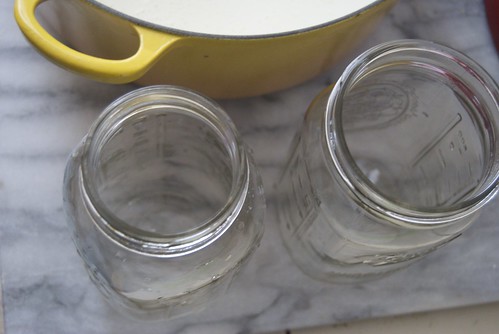
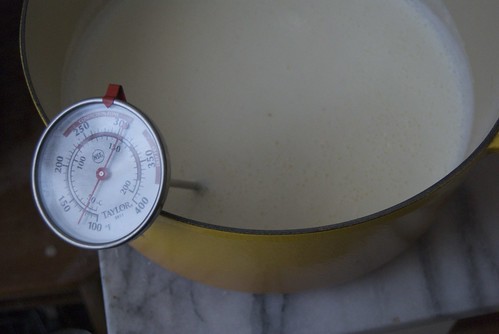
Here are just a few more things to note about yogurt making: Whole milk is the milk I use for home yogurt making. Although commercial yogurt comes with various amounts of fat, whole milk works best in this case (and lately I've been hearing about how full-fat milk is the healthiest kind, but you can try other types if you prefer). I haven't tried goats milk or raw milk so I can't say how well those work. You don't need any special equipment, although a kitchen thermometer can come in handy. There are a variety of special yogurt makers or you could use a crock pot to the yogurt warm, but I took at tip from Harold McGee and just wrap two quart-sized mason jars in a pile of clean dish towels.
For the starter I usually grab a small cup of commercial plain yogurt which has lots of live cultures. Save a little bit of that batch as the starter for your next batch. I don't always manage to save some of the old batch to make the next one, so I have also purchased some yogurt starter from a home cheese making company so that I don't have to go out and buy more yogurt to get the next batch going. I really enjoy the soft, pourable texture of homemade yogurt, but if you prefer something firmer you can add dry milk powder to the milk when heating it. I would love to hear about your yogurt making experience and as I am hoping that home made yogurt will be one of the trends of the next decade!

Yogurt!
A half gallon of milk yields two quarts of yogurt since I think it is easier to make a larger amount each time. (Update 2014: I usually use a gallon at a time and make yogurt every other week)
1-Half Gallon of whole milk
4 tablespoons of yogurt containing live cultures
2 quart sized mason jars
Pour milk into a heavy-bottomed pot and place over medium-high heat and heat the milk to 180 degrees (if you don't have a thermometer: at this temperature the milk will be steaming and just starting to bubble). Remove from heat and let the milk cool to 120 degrees (which is very warm, but not hot). Its is pretty easy to guesstimate the temperatures without a thermometer, but it is crucial that the yogurt be cool enough when you add the starter or it will kill the cultures. It also has to stay warm enough for the cultures to thrive and grow. Whisk in the yogurt and pour the milk into the clean mason jars. Screw lids on top of the jars and place them in a fairly warm place. Cover and wrap the jars with 6-8 clean dish towels. Let the yogurt set on the counter for at least 6 hours (or up to 12 hours) at which point it should be quite thick. Move it to the refrigerator where it will keep for at least two weeks. For Greek yogurt: line a colander with clean cheesecloth and spoon in the yogurt. Let it drain until it reaches the desire consistency. For yogurt cheese let drain until it is a spreadable consistency and use as it or add salt or herbs.

