Showing posts with label creative process interviews. Show all posts

July 15, 2011

Creative Process Interview with El from Fresh New England


 If you haven't seen the beautiful blog, Fresh New England, you need to go admire the lovely photos and amazing recipes. When I first contacted El about participating in my creative process series she was busy getting ready to launch Fresh Photography. Now that she has a bit more time to talk about her work, I am so happy to share the process and thoughts of another talented creative woman.

If you haven't seen it, don't forget to check out the rest of the series here. And thanks again, El, for sharing your thoughts!

First tell us a little bit about yourself and your creative pursuits. I’m the founder and creator of the website Fresh New England, the dessert blog Fresh and the owner and principal photographer at Fresh Photography. These outlets allow me to express my love and passion for New England’s local farms and food producers through cooking, baking and photographing food made with fresh, local ingredients. My photography also helps regional food businesses, chefs, farmers, restauranteurs and authors put their best foot forward and promote their work to the general public.

In terms of my background, I studied art and began baking in childhood and I’ve refined my skills through both formal and informal education as well as travel. In addition to these pursuits, I have several advanced degrees and have worked in the communication and business fields for many years. I’m fortunate because every aspect of my work, be it baking, photography, teaching or consulting informs the other and inspires me to take my skills to the next level. I love what I do - especially when it comes to making food taste sensational and look beautiful.

  
Tell us a little bit about your work space. What do you like about? What would you change about it if you could? Most of my food photography and styling is done in my home studio. Our house was built in 1865 and consequently the studio design is reflective of the Victorian era. The high ceilings, hardwood floors and marble fireplace make it a truly exceptional place to work and be inspired.

At minimum, my studio is a place for prop, equipment and chocolate storage. This is important because at any given time I can have 50 or more pounds of chocolate in the house. More importantly, however, the studio is where I write, work on my iMac, conduct lighting experiments, shoot and style food and edit photos. Unfortunately and all too frequently, it’s also where I eat my blog posts.

I love the space because it’s timeless and it’s elegant. I just feel good when I’m in it. It’s also close to the kitchen which is key when I need to create, style and then shoot a recipe.

It would be nice to have more natural light. But I suppose that’s more about changing the New England weather than changing my work space.


What motivates you to create? Art mostly. I spend a lot of time studying the masters and always find museums inspirational. I’m lucky living in New England because I can pretty much throw a stone
and hit a museum or gallery. What else? Often times the food itself is inspiring and evokes a feeling or memory that I want to capture with my camera. Food is very emotional for people, myself included, and it’s always interesting to trigger that emotion with a photograph.

What stalls or inhibits your creative process? Clutter and disorganization. Being neat and organized frees me up to concentrate on my art. It’s also important because food is pretty messy and the last thing I need is to get cake batter on my Nikon.

Can you talk about some things that you have learned from mistakes or failures? Of course. I’ve learned to embrace them. When I’m learning something new, I expect to make mistakes. Taking the time to learn something properly and from the ground up definitely reduces the likelihood of failure and that’s what I strive to do. But generally speaking, I don’t get upset about mistakes. No one is successful all the time. If you don’t fail, you’re not trying and you’re certainly not learning.


Do you ever have doubts about your creations or creative process? How do you keep them away? Typically, when I see people doubt their work, it’s because they’re comparing their work to the work of others. To me, that’s a waste of energy because everyone has a different skill set and everyone sees the world through a different lens.

If I see work I admire or a style I’d like to emulate I ask myself, “what skills would I have to learn in order to achieve that particular effect, result, etc.?” and then I set out to learn those skills. Taking the time to study, educate and discipline myself sets me free to reach my full potential both as an artist and a person. In the words of Epictetus, “First, say to yourself what you would be; and then do what you have to do.” That’s pretty much it.

March 25, 2011

Creative Process Interview with Dana Treat

Dana Wootton is the amazing cook, writer and photographer behind the blog Dana Treat. She shares recipes for all kinds of vegetarian foods and baked goods. I am always inspired by the diversity of recipes that she shares and enjoy reading about why she cooked something or who she cooked it for. If only I lived in Seattle, I could take one of her cooking classes and learn the secrets to the food that she makes look so good. Luckily for those of us who are far away, Dana took the time to share some of her thoughts on creating with us. This is the last interview in the series (for now?) I hope you have enjoyed it and as always, I'd love to hear what you think!
  
Tell us a little bit about your work space. What works well, what doesn't? My workspace is a large galley style kitchen. I have a large island where my sink is and I can sit 10 people around it for classes. I have a lot of counter space and plenty of room for all my tools. It is, what many people would consider to be a dream kitchen. I have a large Viking refrigerator and a 8 burner Viking stove – the stove I been dreaming of since I first saw one over 10 years ago. The one thing my kitchen lacks is good natural light. The room faces north and there is another large house right next to us. Seattle is pretty dark much of the year anyway and to have a dark kitchen is a bummer, especially since I spend so much of my time in there. But we are about to get some more lighting to try and help.

What motivates you to create? I would say there are several things that motivate me to create. Sometimes I just really want to eat something good! Other times, I will cook or bake something for my blog because I want to share a recipe with people. We are always having some kind of party or dinner party or just friends over for dinner. Everyone we know loves to come to our house for meals, so I have a lot of expectations to live up to! I’ve also been able to donate dinners or classes to organizations that mean something to me and my family. I always want to make the people who bid on my offerings feel special.

What stalls or inhibits your creative process? I have two young boys, ages 6 and 4. I started my personal chef business when my oldest was 16 months old, so I have always had to cook around them and their nap schedules. Even though I am experienced at it, I still find it to be very hard to get all I need done in the time I have. They demand A LOT of my attention, so I like to be done cooking when they are home and awake. As I get busier, this balance gets harder and a lot of the time I feel like I can’t get any “brain space” to think through all I have to do. I know many moms talk about not feeling like they are good at any one thing because they are trying to do too many things and I can relate to that feeling.

What are some of your common mistakes or difficulties? My most common mistake is simply not allowing myself enough time to cook. I am pretty good at managing my time since I don’t have a lot of it free. Sometimes I make a serious error in judgment and then I really don’t enjoy the work. If I’m not watching the clock, I get very Zen in the kitchen. I am efficient and smooth and I feel like a well-oiled machine. If I start to fall behind, I get sloppy and feel like I am all over the place. Another mistake, that goes hand in hand with the first one, is not reading a recipe all the way through or carefully enough. There is nothing worse than realizing something needs to rest in the refrigerator overnight when you need it right now!

Can you tell me about a project or something you have made that you love or find really exciting?Even though I am just beginning my regular teaching journey, I am so excited about this project. Up until this year, I have taught quite a few classes, but on no set schedule. I always thought it would be a great way to use my passion, but could just never figure out how it would all work. And then, I just put it out there. I thought long and hard about what I wanted to teach and how much I wanted to do so and put together a schedule. I emailed everyone I knew and put it up on my blog and my first two months sold out within a couple of weeks. I am really proud and pleased about that. I have some great things in the works and am already looking forward to the spring classes.

March 18, 2011

Creative Process Interview with Dani Fazio

 I'm happy to introduce to to Dani Fazio who is a versatile creator and a dear friend of mine. Over the past few years I have glimpsed many of Dani's various creative pursuits and it seems like she always has a new idea or project in the works. I love learning about Dani's unique perspective on her creative process. Each of these interviews has reminded me, taught me new things and inspired me in some way. Soon after Dani answered my questions she wrote and told me that she had completely changed their dining room into a dedicated studio space. We get to see some of that in these photos. You can see more of her work at her website.

Tell us a little bit about your work space. The dedicated space I work in is at home in my “dining room” which we don’t actually use for dining in anymore. I have all my art supplies in there, along with a table and plenty of floor space I can work in. It’s in the center of our house, which can be distracting. But, it’s a large room with two windows and good light. Aside from there, the state of Maine is my studio. I make a lot of work in Maine when I’m shooting.

What motivates you to create? I can be motivated by a fleeting moment- I notice the way something looks in nature and I feel compelled to photograph it, sketch it, write about it- anything to preserve that moment/ feeling I had. I’m often surprised by ideas that pop into my mind at any given time of day… I try to remember that feeling so I can work on that idea again when the time is right.

What stalls or inhibits your creative process? Having a full time job, plus a part time gig, taking courses, preparing for graduate school, being a wife, a doggie mama, a family member, a friend… these things all take up so much time- mentally and in my calendar. I find that if my energy is spent, I just can’t force myself to work. I don’t rely on my art for income, so that hasn’t been a problem financially… but as an artist, it’s frustrating! Thankfully, being an artist is within us all the time- 24/7, so there’s not really a time I’m not in my creative process- I just may not be creating something tactile at the moment- but the ideas are always flowing, and the thought process is always there.

List a few common mistakes or stumbling blocks you run into. How do you avoid these or get out of them?
Sometimes I get excited about a new medium or project and talk a lot about it with others. Then, I feel compelled to finish the work because I said I was going to. Mistake. That means that the project then becomes another thing on my mental “to do” list, and the original reasons I wanted to do it fade away. So, I try to journal out the ideas as much as I can before spilling my guts about the work—this way I can give some information, but I also have learned to say, “…or, I may end up forgetting about the whole thing!” which often happens.

What or who helps to support your creative work? My wife, Jen, and my family all support my creative work. But, really only I can conjure up the desire to make work. If one of them said, “Dani, why don’t you go photograph in the woods today?” or Jen leaves for the weekend and suggests I use my free time to paint, I can’t. It has to be on my own terms.


Can you tell me about a project or something you have made that you really love or find really exciting?
When I was at Haystack Mountain School for an artist retreat I learned how to do gelatin printing- printmaking without a press, just a gelatin plate. I was so nervous to make art in this way- not knowing what the result would be (opposite of my photography) and then I slowly just let myself be taken over by the process. The first series of work I made there was incredible- I thought, “Did I make this?” and yet I recognized the strokes and patterns in paint and I knew it came from within me. Since then, I set up a small print area in my dining room studio and whenever I can I work on gelatin prints. Nothing will ever compare to the first time I used this process, though- nervous, excited, surprised.

Can you talk about some things that you have learned from mistakes or failures?
The biggest “lesson” I’ve learned is that it’s okay to make art for myself. For fun. That other people may never see. When I graduated from art school, I was in the mindset of making work to meet deadlines, and show in galleries. So, when I stopped showing in galleries I stopped making work. Then, I wanted to work again, but I thought “Well, if I do this project, maybe this gallery will show it.” My work always had to have an external process. I found that with crafting, too. I may make something I like, and then I think, “Oh, I should make lots of these, and sell them in art fairs!” but then I don’t. Realizing that I can have a whole collection of work that no one will ever see, buy, or
care about is tremendous.

March 11, 2011

Creative Process Interview with Kristen Fagan

 Today we get to hear from Kristen Fagan from Creative Stash. Kristen creates in a variety of media from graphic design, to painting to making jewelry. She sells some of her work in her etsy shop and also does freelance design. I get the feeling that Kristen is creating all the time so it's great to hear her thoughts and approaches to all of this making and to finding a balance with so much going on.

Tell us a bit about yourself and your creative pursuits. I'm Kristen, wife to a very supportive husband and mother of two happy and energetic little boys ages 4 and 6. I work from home full-time as a graphic designer and spend the rest of my time at Creative Stash where I freelance small business graphics, design wedding invitations and create as a mixed media artist. I live for time with my family, making art, yoga, can’t catch your breath laughter, road trips with my husband, dancing with my kids and enjoying the natural world. I love to learn and adore anything made by hand.

Tell us a little bit about your work space. I have a few spaces where I create. I design in my bedroom office, I paint in my garage studio and I make jewelry and other crafts throughout my home.

What do you like about it?
Office - I have a desk armoire in my bedroom. I love this thing! It is large enough for my computer, printer, scanner, a filing cabinet, a little desk space. If something doesn’t fit I need to file it, archive it or get rid of it (so helpful for me to keep my clutter to a minimum). I love that I can close the doors and walk away without seeing all my work in progress.

Studio – A few years ago, we moved into a home with a 3 car garage and I was ecstatic! I knew I would carve a little space in there to paint where I can leave my easel up and have works in progress without the stress of little ones knocking into it. My garage door has windows to allow sunlight in
which is wonderful. I placed a small desk in there for organizing and extra counter space to create. I am so blessed to have this area; it has definitely helped me create more just having this space available.

What would you change about it if you could?
Office - I would love a laptop! I am stuck in one place on my desktop computer and really wish I had the freedom to move around or take my work on the go from time to time.

Studio – I would love a divider of some sort to separate me from the rest of the “garage stuff”. I have a rug, a desk and storage bins that help define my space but, overall it’s very utilitarian. There isn’t much personality to inspire me. The temperature isn’t regulated in the garage and it gets very hot in the summer in Arizona so it isn’t useable a couple of months out of the year.

What motivates you to create? My overall well being is directly related to how often I create. When that desire to make something arises from deep within if I don’t acknowledge and honor it I will explode. Haha, this all sounds so dramatic, doesn’t it?! For real though, I think I will.

What stalls or inhibits your creative process? Energy – Being physically or mentally drained can have a dramatic effect on my creativity. When I’m tired, I doubt myself and the work I am doing. I am learning to allow myself to rest instead of forcing work when my energy level is low.

What or who helps to support your creative work? My husband is a huge support. When I need to creativity explore on a whim, or have a deadline I’m trying to meet he gets stuck making dinner
or getting the boys ready for bed and he does effortlessly. Nights when we have family time until the kids go to bed, my husband sacrifices “our time” so, I can create. I am so very grateful that he gives me the space I need, whenever I need it. Being able to create makes me a happier more peaceful person to be around so, I like to think it’s a win-win.


Can you tell me about a project or something you have made that you really love or find really exciting?
Most recently, I made earrings from canvas. I really like that it combines my love for painting and jewelry and I look forward to expanding on this idea and experimenting with canvas in more new ways.

Do you ever have doubts about your creations or creative process? How do you keep them away?
Oh yes, all the time. When I’m overwhelmed I question everything – my life, my process, whether the job is worth it, whether I am a good artist, where I am headed and if it’s the right direction. I can get pretty emotionally worked up when I’m overwhelmed. To keep these thoughts at bay, I need to give myself some space, take a walk or go to yoga and if that’s not an option due to a deadline I try to break the process down into manageable steps and not look to far ahead.

Do you have any words of wisdom or advice for people who want to create more or people who are trying to earn a living from creating?
Try not to compare yourself to others, be patient and kind with yourself, find comfort with who you are and what you can do, try all sorts of things, jump at opportunities when they arise and continually work towards realizing your dreams.

March 4, 2011

Creative Process Interview with Caroline Hewitt


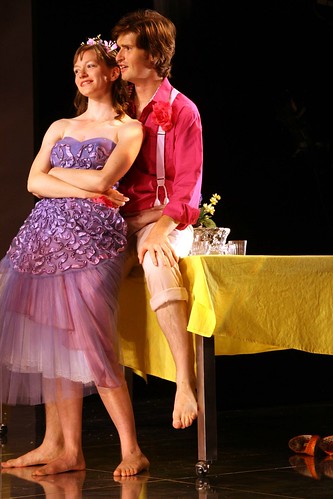
EDITIMG_6080This week's interview is with someone I have known for a very long time. This is my sister, the actor. I witnessed many of her early rolls, but I think her first formal part was in a silent movie in first grade. Caroline has been pursuing her passion for theater for most of her life. In the past few years she completed her MFA and is now making her way as an actor in New York. Although we have taken different creative paths, I know that  Caroline's thoughts resonate with all kinds of creating. In this series, I wanted to share ideas from many different perspectives on creating so, of course I wanted to include my sister. I've included a couple of photos from shows that she has been in.  I hope you enjoy!

You can read the previous interviews here. 

Tell us a little bit about your work space
If I am working by myself on a role (as most of my creating happens in “the rehearsal room” with other people).  I generally like to use studio space to explore on my own.  I like a room with as little in it as possible or I will get distracted.  Lots of space and some windows, a wood or carpeted floor, and a chair, bench, and table. 

What goes on in there? I often do work on my own if I’ve encountered something in the rehearsal room that I want to explore more, or if I’ve come up against something that isn’t working. If I am working on finding the character I tend to start with the body first, to walk around the room and try to feel myself inside the physical character. If I’m having trouble finding the emotional depth of a moment, I try to dig deep into my own life to find material to draw on (this is the work I call the “rolling around on the floor and crying” work).  All of the work I do on my own in a studio is a series of potential connections inside me, and whether they are apparent to other people when I rehearse doesn’t matter so much as whether I can connect to them at a deeper level when I need to. 

What do you like about it/why does it work well?
  Well, the room is great because I can’t get too sidetracked.  Of course I have to take lots of little breaks—the work is intense and it needs room to breathe.

What would you change about it if you could? 
Well, at this point I don’t have access to a space like this (without paying), so I would give myself a studio and a key.  I would change my ability to be in this space right now!  Right now I have to use my own room (which is very small) as this space, and it has too many distractions. 
3290945839_082830fb26

What motivates you to create?
Other people.  Because theater is collaborative, it is important that my desire to be creative is fed by the people I work with—both inside the rehearsal room and in the world.  I mean this in a broad sense: it can be a text that I read, it can be someone I see on the subway or overhear at a restaurant, a scene partner in rehearsal or a director, someone who makes me upset or happy or tired, or a work of art in a museum.  Basically my work is all a reaction to a stimulus: so my creativity, while it ultimately must come from very deep inside me, is spurred by my surroundings. 

What stalls or inhibits your creative process?

It’s hard to work alone as an actor. Since it is collaborative, my process is stalled when I don’t have people to work with.

Do you ever have doubts about your creations or creative process? How do you keep them away?

First and foremost is the lack of trust in myself and my work: the feeling that I don’t actually deserve to be in the room. But I have to move beyond this or I will be paralyzed.  The next big challenge for my creative process is knowing how much work I need to be doing on my own.  This changes drastically from role to role, and can be tricky to figure out.  A friend used the analogy of holding a dove in your hands: if you hold it too tight (work too hard on a role, a project) you will kill it.  But, if you hold it too loosely (don’t put anything into a role that needs work), it will fly away.  I tend to hold too tight, so I am learning to reconcile all the things I think I should do with what I actually need to do to make working on a role the most successful.
7O4Q4338

Do you have any words of wisdom or advice for people who want to create more or people who are trying to earn a living from creating? I think something important that I have learned as an actor is that I can never begin by focusing on the product of the work.  If I do, then the work won’t actually happen.  I need to get rid of any ideas I have about how the character should be performed or how the process will be.  I have to enter into my ‘creative process’ with the willingness for everything I think I know about a role or a play to change and to be changed.  I have to enter it with a sort of childlike innocence and curiosity every time.  To allow myself to be surprised, and to follow the direction that the moment takes me, not to hold onto a potential result.  This is much easier said than done.

February 25, 2011

Creative Process Interview with Marisa McClellan

 Marisa McClellan is the creator of Food In Jars, a blog filled with all kinds of ways to make, keep, eat, and use canned goods. She shares creative recipes, tips and great information about preserving, cooking, and baking. I always enjoy reading her thoughts, learning from her knowledge, and being inspired by her ideas. I am delighted that she took the time to answer my questions and share some of her thoughts on creating. 

Tell us a little bit about your work space
As a food writer, my creative work time is split fairly evenly between my kitchen and a nook in the den my husband and I share. We live in an apartment that belonged to my grandparents for its first 36 years of life, so it’s a space that is more than a little quirky and deeply familiar to me.

What goes on in there?
I spend my time in the kitchen chopping, cooking, straining and finally preserving fruits and vegetables in jars. My kitchen is all of 80 square feet, which is both a blessing and an infernal frustration. The size forces me to be organized and work a project through to completion, but I wish for a larger, more modernized space on a near-daily basis. When I’m in the den, I’m writing (or trying to). Sometimes I get distracted by my husband’s Lego collection.

What do you like about it?

My kitchen is galley-shaped. Like that configuration or not, it certainly maximizes the available space.

What would you change about it if you could?

The kitchen in our apartment has not changed significantly since the apartment was finished in 1966. Its vintage look is charming in its way, but after 45 years of use, everything is starting to fall apart. Additionally, the stove is vexing simply because of its design. It’s a model in which the oven is over the cooktop. That means when you have pots on the front two burners, it’s nearly impossible to work on the back burners without scalding yourself.

What motivates you to create?

Essentially I start to go crazy when I’m not cooking, writing or taking pictures. I do it so I don’t spend my entire life on the couch, watching myself into a reality TV-induced stupor. The fact that there’s such a practical outcome (loads of canned goods to be gifted and eaten all year) is something of a bonus.

What stalls or inhibits your creative process?

I really struggle with the shorter days of winter. I use my camera every day and when I’m leaving for work in the dark and coming home in the dark, the lack of natural light for making images of what I’ve cooked starts to eat at me.

Tell me about a project or something you have made that you really love or find really exciting.

I’m currently working on my very first cookbook and it’s been an amazing gift to have the opportunity to do it. Of course it’s not always easy going, but pushing myself to make something that’s bigger than I’ve ever done before has been a remarkable experience.

Can you talk about some things that you have learned from mistakes or failures?

One of the things I’ve learned from my failures is that I’m far more likely to fail when I’m really exhausted. Sometimes its better to let that batch of fruit get a bit over ripe than it is to force myself to the stove when I know I’m not equipped to handle it.

Do you ever have doubts about your creations or creative process? How do you keep them away?

I sometimes have doubts about the field of food writing. There are so many people who are doing it, or trying to do it, that I sometimes wonder whether it was a wise choice on my part. What makes me so special to think that I’ll be able to succeed in this area above so many others? The thing is, it’s the only work I’ve ever done in my life that felt natural and seemed to come from within me. When I remember that, I’m able to shake off the doubts (which are most often brought on by situations in which I compare myself to others) and start plugging away again.

Do you have any words of wisdom or advice for people who want to create more or people who are trying to earn a living from creating?
Get to know landscape before you dive in. Find a niche that works for you and do your best to comfortably occupy that space (but don’t force it). Be generous. When you start to get a little attention, do your best to shine a light on others who are doing good work in the same area. Keep learning and share what you know. 

I've been posting this series every Friday for several weeks. You can see other interview with creative women here.

February 18, 2011

Creative Process Interview with Jamie and Carmen from City Chic Country Mouse

This week we have the privilege of hearing from a creative team. Mother and daughter Carmen and Jamie are the women behind City Chic Country Mouse. They make all kinds of fun and practical items in beautiful fabrics. I wish I had an ironing board just so I could get one of their lovely covers (and maybe also for ease of ironing fabric). It's great to hear about how these ladies became a business and creative team as well as family. Be sure to check out their shop and their blog to see more. 

First, tell us a little bit about yourselves.
We are a mom and daughter shop which we named after our nicknames for each other. Carmen (Mom or "Country Mouse") and Jamie (daughter or "City Chic"). We gave each other these names based on where we live and our quirky characteristics due to our geographical locations. For example, City Chic must always drive when Country Mouse visits her in the city (traffic can be scary for a Country Mouse!). We make each other laugh frequently because of our differences.

We specialize in sewn items designed to make your household chores more cheerful, fun and lovely.  From the sewing/craft studio to the laundry and kitchen we enjoy bringing style to these everyday tasks. It all started when Country Mouse handed down a thirty year old Singer sewing machine to City Chic and falling in love with some fabric at a local fabric store. Who knew it would blossom into an unbelievably enjoyable joint venture?!?

Tell us a little bit about your work space.
City Chic and Country Mouse is a team effort, and we are each lucky enough to have our own dedicated sewing space in our homes. City Chic: my space is currently in transition from an upstairs extra bedroom and is moving to the lower level family room (this used to be known as the "man room") see photo, below. I purchased an expedit bookshelf and desk from Ikea (I think every crafter should have a big shelving system to keep organized!). This room is much larger than the bedroom, however I do wish it had a door that I could close when I have a big mess to hide (being creative can be a messy process!).
  

Country Mouse: my space is a spare bedroom in which we removed the closet rod and installed shelving for fabric (photo below).  My husband found a gorgeous antique library table and a drafting table over which we placed a countertop which works great for my cutting table. A long, narrow Ikea table holds my sewing machine and serger, allowing lots of room for extra large items like quilts. An additional Ikea shelving unit holds more fabric, books, etc. I have great natural sunlight, however there's never enough space, and I keep threatening to knock out a wall to expand into the adjoining bedroom!
  
What motivates you to create?
We find it's important to make time to get out of the studio and visit exhibits and craft shows when they're in the area. For example, we made the trip to an Apron Exhibit at a local museum when it was in town. A trip to view other creative peoples' work always helps us to refresh. It’s easy to spend all of your time sewing, but getting out and trying new things really does help bring new inspiration to the items you create.

What stalls or inhibits your creative process?
There are lots of distractions when you sew at home. There are dogs and husbands that need attention, meals to cook, and the house always needs cleaning! We try to dedicate about 1 weekend a month to get together and sew with as little distraction as possible. We plan easy meals and prepare as much of our projects ahead of time in order to make the best use of the weekend sewing marathon, as we like to call it.


What or who helps to support your creative work?
We are lucky to be a mother-daughter sewing team and thankful we have each other for support. When one of us gets busy with life, the other one is always ready to step up and take on more of the responsibilities for sewing and running our etsy shop.

Can you tell us about some of the lessons you have learned in the process of making?
Often we have what seems to be a great idea for a new item but after making a first sample discover it's either far too labor intensive or just doesn't rate high enough on our cuteness scale. Over time we've learned when it's best to scrap an idea and move on to something else or continue re-working a design.

Do you have any words of wisdom or suggestions for other creators?
It’s so exciting to dream of earning a living from your creations! There are lots of helpful books on the subject, two of the most recent ones on our shelf are The Handmade Marketplace by Kari Chapin and Creative, Inc. by Meg Mateo Ilasco and Joy Deangdeelert Cho Here are a few things that work well for us:

Take beautiful pictures: if you sell online, your photo of your creation needs to be bright and clear. Practice taking photos in different rooms to find the best lighting. Try out different props and styling. Edit your photos (we love using Picnik).

Have a variety of income: Don’t depend on just one item that sells well for you. We try to have a cohesive variety in our shop. We also try to do a few craft shows, have a few wholesale customers, and we both still have regular jobs we go to.

Thank you so much for reading our interview and happy creating! 

Don't forget to check out more of the creative process interviews from the past several weeks here. And, as always, I would love to hear any of your thoughts on creating (or other things) in the comments!

February 11, 2011

Creative Process Interview with Tammy Strobel

Tammy_portrait
Ready for some more Friday inspiration? Today we are lucky to hear from writer, Tammy Strobel, who blogs about simple living at Rowdy Kittens. Tammy discusses approaches to and ideas for simplifying, making positive changes, and truly connecting with others (among many of the things that she writes about). She explains things in a very approachable way, acknowledging the hopes and fears that come with following your dreams and choosing your path in life. At her site you can also find more ideas in the ebooks she has written, interesting guest posts and ideas for tiny houses. I am so glad that Tammy was able to take the time to share her thoughts on her creative process here!

First, just tell me a bit about yourself and your creative pursuits.
I love doing yoga, bike riding, drinking coffee, playing with my cats, taking photos, knitting, and my biggest love is: writing.

Tell us a little bit about your work space (this does not have to be a dedicated space, it
can be whatever space you use most often for creating)
I work in different spaces everyday. Sometimes I work at my kitchen table, the library, or in various Portland coffee shops.

Wherever I work, I’m writing in a text edit program or in 750words. Sometimes I use my notebook, but I usually use my notebook to record ideas. I’m a fast typist, so I can get easily frustrated trying to write long posts in my notebook.

I love working for myself because I can work where and when I want. I don’t have to stick to a 9-5 schedule; I wouldn’t change anything about my set-up. I love being able to walk down to a coffee shop or sit in my kitchen with a fresh cup of coffee.

What motivates you to create?
I want to help other people through my writing and writing makes me happy.

What stalls or inhibits your creative process?
I have lot of problems with my lizard brain. Seth Godin describes the lizard brain as, “the resistance. The resistance is the voice in the back of our head telling us to back off, be careful, go slow, compromise. The resistance is writer's block and putting jitters and every project that ever shipped late because people couldn't stay on the same page long enough to get something out the door.”

My lizard brain is very hard to tame and is constantly yelling at me. I tend to be harder on myself, than other people.

Right now my current fear is not being able to finish up my book proposal. My lizard brain is constantly saying, “Well, even if you finish the proposal, how do you know a publisher will pick it up? And seriously, do you really think you are a writer?”

I bring this up as example not because I want you to feel sorry for me. But for all of you to realize that everyone deals with the lizard brain. We all have fears. The trick is figuring out how to overcome those fears and keep creating.

What or who helps to support your creative work? My husband, Logan, has been a huge source of support. I don’t think I would still be writing if it weren’t for his constant encouragement.


If you are interested in reading more creative process interviews, you can find them here.

February 4, 2011

Creative Process Interview with Angela Flicker

Thanks to everyone who has shared feedback about this series. I am glad that you are enjoying it and hopefully gleaning useful bits and ideas for your own creative process. If you haven't had a chance to read the previous interviews you can find them here (and there is much more to come!)

Today we get to hear from Angela Flicker who is an amazing quilter and fabric artist. She also shares so much inspiration and information for all of us who are creating at her blog, The Artists' House. I am amazed by the variety of things on her blog from a quilt along, to photoshop tutorials, to interviews. I am inspired to see such a great example in what Angela has done to complement her artwork with a really vibrant blog. You can see more of her work here and here. I'm happy that she was able to share her thoughts on creating with all of us!

First, just tell me a bit about yourself and your creative pursuits.
When I was young, creative woman surrounded me. I remember wearing extravagant handmade dresses and sleeping under blankets made by loving hands. Yet, while I was surrounded by the art of sewing as a young girl, I myself didn’t start sewing until I bought a nest of my own. Naturally, when I was pregnant with my daughter, I signed up for my first quilting class as a means to make my daughter the perfect quilt, based off a design I had in my head. A short time later, as a new mother with one quilt and pattern under my belt, I found myself sketching quilt ideas constantly. When my daughter would nap, I would sew. One quilt turned into two, two to three, and soon I realized that not only did I have a gift for design, I also had found something I was truly passionate about. And so my creative pursuit is to sew everyday, to sew with my head and my heart, and hopefully learn to make a living out of this passion. 

Tell us a little bit about your work space.
When I decided to quit my day job and stay home with my daughter while starting a creative business on the side, I knew a functional and peaceful workspace was a must. We remodeled a front room in our house to create a space for me (see photos).


What goes on in there?
Everything really, computer work, sewing, drafting, packaging orders, planning, etc. The only think I rarely do in there is blog –I often do that early in the morning before my daughter wakes up, while I’m still in bed drinking my coffee.

What do you like about it/why does it work well?
The space works well because my husband and I did a lot of thinking before we designed and refinished the space. I wrote a great post about this on my blog titled, “Creating a Space that Works for You."

What would you change about it if you could?
I would make it bigger.  My family lives in the city, so homes are small –around 1000 square feet total. I feel this is a great sacrifice to make for all that the city has to offer, yet when it comes to space, I do wish I had a bit more.

What motivates you to create?
My mind is constantly shouting ideas at me, and since I can’t ignore shouting, well, it motivates me to create.

What stalls or inhibits your creative process?  Fear. When I let fear of failure sneak in, often I’m stifled by indecision. These moments are hard because in these moments my heart isn’t in my work. When this happens, I try to force myself to work through the fear. Sometimes that works. Other times I need to just take a break from sewing for a few days and often my confidence and motivation comes back.

What or who helps to support your creative work?
My husband is my biggest supporter and fan. Everyday he comes home from work and watches our daughter for a few hours so that I can have time to work. Along with that, he is always encouraging --he believes in me even when I don’t. And when my mood gets bad due to the stress, well he understands. I’m so grateful!

Tell me a little bit about your creative process – where do ideas come from? When do
you usually do your work? How does the process compare to the final product (if there is one)?
Everything, that’s the problem, haha. I’m constantly coming up with ideas of things I want to create. Every day sort of things inspire me –a walk in the park, my daughter’s hands, children’s books, magazines, my home, travel, a city sky line, and so much more. The problem is not coming up with ideas, the problem is figuring out which ideas are best to run with since there is only so much time in the day.

Do you have any words of wisdom or advice for people who want to create more or people who are trying to earn a living from creating?When you feel overwhelmed, go on an electronic fast. One mistake I continue to make is that I sometimes get too caught up in social media and blogging, and then I struggle to find time to create. Sometimes you need to just shut it all down and just indulge in your art since that is where the true passion usually lies.

January 28, 2011

Creative Process Interview with Kathie Lapcevic

I hope you are ready for more inspiration and ideas to keep you working on your creative projects. In case you missed any of the previous posts in this series, you can find them here. Today we get to hear from Kathie Lapcevic, the author of Two Frog Home and the creator of It's Only a Choice. On her blog Kathie shares a lot about the small joys of living simply and her various creative pursuits. I'm really glad that she could stop in here and share her thoughts since her writing frequently aims to inspire others and help them to reach for their dreams. I hope you'll enjoy reading about Kathie's creative process and her exciting projects. Please feel free to share your thoughts on this interview and on creating in the comments!

Me
First, can you tell us a little bit more about yourself? 
I live in northwest Montana with my soul-mate, Jeff.  As a creative professional, I’m a writer and a photographer.  I write mainly about two of my favorite creative endeavors: food and gardening.  The mere fact that I can work on creating recipes and get paid for it never ceases to amaze me.  As a creative hobbyist, I focus on quilting, sewing, and knitting though I’ve been known to dabble in other crafts as I’m inspired.


Tell us a little bit about your work space. I use a spare bedroom as my studio/office.  It’s a small room about 100 square feet, but perfect for my needs and I’m incredibly grateful to have this room of my own. 

What goes on in there?  Mostly I write and sew in here.  I have two tables one permanently houses my cutting board and the other keeps the sewing machine.  I also have a small desk, perfect for my laptop.

What do you like about it/why does it work well?  I enjoy that I can leave projects half done strewn about the tables without worrying about clearing a table for dinner or company.  I know just how lucky having this dedicated space makes me and I never take it for granted.   

What would you change about it if you could?  I’d be lying if I didn’t say that I’d like a larger space, but really I have no real complaints


What stalls or inhibits your creative process? I have to honestly say here, that I’m my biggest saboteur.  When I don’t stick to a routine or when I don’t get the rest and rejuvenation I need; I get stuck.  I personally function best when I adhere to a routine, when I neglect that for too long, I find it extremely difficult to get back into my creative work.  I also find that I have to work twice as hard, because I haven’t practiced my skills and my mind can’t settle into the work that must be done.  Including some kind of rest and/or fun in my routine is as important as sticking to my work, because without that rest my brain just gets fried and nothing good happens from a place of burn out.  

Morning Routine
  
Can you tell us about a project or something you have made that you really love or find really exciting? I wrote a cookbook, Gift it From Scratch, that will be published in 2011 by Willow Creek Press.  The writing of the cookbook itself is an accomplishment of which I am extremely proud.  The fact that I followed through on that manuscript and faced rejection (lots and lots of rejection) before receiving and signing the book contract is something that I will never forget – it was vulnerable, heart-breaking, exhilarating, and uplifting sometimes all at the same time.

Cloudy Work Day

Do you ever have doubts about your creations or creative process? How do you keep them away? 
Of course I have doubts every now and then; I don’t see how a person couldn’t.  I don’t think that those doubts have to be crippling, however.  I just think that they’re a normal part of being a creative human being.  I don’t know that I keep them away so much as accept them when they come, move through those feelings, and get back to work.  The one good thing about working creatively as a form of self-employment is that you get feedback in the form of money and/or comments.  I’ve learned that I need to use that feedback to validate myself and my work.  I’ve also learned that rejections are not personal and I need to step back and look to those rejections for ways to improve not only my craft but also how I promote myself and my abilities. 

Do you have any words of wisdom or advice for people who want to create more or people who are trying to earn a living from creating? Keep at it, whatever it is, don’t give up especially when you most feel like it.  I think creativity has to be nurtured every single day, not only when the inspiration strikes.  Some days this might mean that you come up with absolutely nothing of product value, but you will have improved your skills and that is never a bad thing.

Once you decide that you want to make an income from your creative endeavors, whether as a little something on the side or as a sole-income, your attitude must shift from that of a hobby to a business.  This is extremely important because a business is something that must be attended to with regular hours and always looking forward to the future.  A business must be attended to whether or not inspiration strikes; deadlines have to be met whether or not you’re feeling it today.  Take classes to not only improve your creative skills but also your business skills.

One final word of advice, find creative people to help and support you.  Everyone needs a mentor, find someone in your creative field who’s willing to answer questions and help you navigate the waters.  Life is so much easier when you’re not re-inventing the wheel with each new project.

January 21, 2011

Creative Process Interview with Michele Heidel

Today I bring you Michele Heidel of Fennel Studio. Michele makes a variety of fun and useful items from fabric and yarn. She uses the wonderful term soft goods to describe her pouches, pillows and more. No matter what you like to make, I think you will be inspired by her thoughts on creating her work. I love seeing how other people arrange their spaces and organize their materials and Michele has included a couple of photos of her studio. I am so glad to have the opportunity to share with you the wisdom of creative people like Michele.
 
First, just tell me a bit about yourself and your creative pursuits.
I live and work from my home in Rochester. I moved here from Chicago with my significant other, Steve, who teaches philosophy at the community college here. We have two friendly and energetic Labs who insist on going for walks during snowstorms.

I have a BA and MA in Fiber Arts from Eastern Illinois University, and while I was a student there I worked at the local art center. I loved the challenges of museum work, and it seemed like a more reliable career choice, so I went through the Arts Administration program at the School of the Art Institute of Chicago. And for over a decade I worked for several great arts organizations, but I didn’t really do much with my fiber arts during that time.

Then a couple years ago my day job didn’t seem as satisfying anymore. I enjoyed what I did, but I felt like something was missing. I started working with yarn and fabric in my spare time and realized that I was way overdue for tapping into my creative side. When the time was right, I left my museum job to focus on my creative work full-time.

In my non-studio time, I love to bake (and of course eat), read quirky books, pretend to enjoy the treadmills at the gym, and catch up on all the TV and movies I miss when I’m wedged deep in my studio. I also love photography and try to get out with my vintage film cameras when I can.

Tell us a little bit about your work space What do you like about it/why does it work well?
What would you change about it if you could?

We have a spare bedroom in our house that went from a storage area to a studio in one weekend. The walls were covered in awful dark brown paneling, which repainted in light green that the paint sample called “Fennel.” So when I thought about what to name my business, I went with the literal interpretation: Fennel Studio.

I love that it’s a space removed from the rest of the house. If I’m up against a deadline and it looks like a tornado hit, I can escape to another room for a break. And I’m used to leaving the house to go to work, and having a specific place I can call “the office” helps get me motivated.

If I could change anything, I’d want a large sink/washbasin area for hand dyeing, but that would involve some Harry Potter stuff on our plumbing. More realistically, I’d replace the beige carpet with something a little more fun yet durable. And maybe some shelving with doors to keep dust out and yarn in.
What motivates you to create?
I love having a goal. Sometimes it’s a show or a custom order to get me motivated. But really after working and creating every day, it becomes a habit – if I don’t get to my studio at some point in the day, I feel weird. And as I work on one thing, a little part of my brain is puzzling on other possibilities. I guess that means I have a hard time living in the now.

What stalls or inhibits your creative process?
Self-doubt! I second guess myself all the time, especially if I’ve been looking at work by other artists or craftspeople whose work I really admire. Sometimes instead of being inspired, I think that I’ll never be as talented or successful as they are. I have to remind myself that they had to start somewhere too, and probably had the same doubt I’m having now. Then I close my web browser and get back to work.

What or who helps to support your creative work?
Without Steve, I wouldn’t have had the confidence or ability to launch Fennel Studio. When I left my previous job I was also leaving behind a steady paycheck, health insurance, etc., and his support and trust was crucial. My friends have also been very supportive. They give me great feedback on my items and are always encouraging. They also are some of my best customers.

Can you tell me about a project or something you have made that you really love or find really exciting? I’m excited to work more with creating my own hand-dyed fabric and yarn. I did hand dyeing in college, and more recently for a few custom orders, and I remember just how much I love it. When we lived in Japan several years ago I learned shibori dyeing and I’m really excited to dive back to it and incorporate that into my new work.
Can you talk about some things that you have learned from mistakes or failures?
I have spent so much time making things that I thought were absolutely great but didn’t sell at all. So if I’m introducing a new product I keep it to a limited edition at first and pay attention to people’s reactions.

I also learned to stick to a budget. I can go overboard on supplies, thinking “Oh, I’ll use this for something someday!” I have a huge bin devoted to the someday somethings. Now I plan my projects like I would follow a recipe: if I have it, I’ll use it, and if I need something for the project, I’ll put that on my shopping list. No impulse buys anymore.

Tell me a little bit about your creative process – where do ideas come from? When do
you usually do your work? What about the final product?
Usually my ideas come from necessity. I need a small clutch for quick errands. Done! I need something to keep my neck and hands warm. Done! And when I’ve got the function down, I work on making the form as beautiful and artful as I can. Sometimes I get hit by ideas in the weirdest places. Like driving to Target, or unloading the dishwasher. But I’m a believer in that mental trick of thinking hard about a problem, then stopping, and the answer will come to you later.

Do you have any words of wisdom or advice for people who want to create more or people who are trying to earn a living from creating?My advice for anyone trying to earn a living from creating: remember that you need to be paid for your time and effort or you’re just spinning your wheels. I learned this after my first year of not pricing my work appropriately, and I still have a long way to go. A lot of customers and craftspeople, myself included, seem to forget the time it takes to create a unique item by hand, and they forget the intrinsic value (ethical and economic) that handmade local products have. Low prices not only devalue our work and the work of others, but they also prevent us from being confident in our work and making a living wage. We’re worth it!

January 14, 2011

Creative Process Interview with Megan Gordon

To start off this creative interview series please welcome writer and baker Megan Gordon. I love the way she seems to effortlessly combine her thoughts on life and food in her blog, A Sweet Spoonful. If you haven't seen her blog, you should definitely check out the beautifully written snapshots of her life, gorgeous photos and, of course, mouth watering recipes. Even though I only know Megan through her blog, I feel much sympathetic joy for her new baking endeavor, Marge. I am always inspired by people who follow their dreams and make them happen and I'm thrilled that Megan was able to share her thoughts on her creative process with us.

First, can you tell me a little bit more about yourself?
Well, I’ve always been a writer. Even from a pretty young age I kept a journal and would write mundane lists of what I did throughout the day. Then in high school and college, I started to cultivate that into writing short stories and poetry. I decided to go into teaching so I could hang out with kids and get them excited about reading and writing— I soon learned that so much of teaching is about management and discipline and that really wasn’t my thing. So I started freelance writing and baking: one really challenged me to research, network, and push myself while the other was purely calming and really nourishes me in a way that nothing else does. And now—that’s where I am. I write for other folks and I write for myself on my blog, A Sweet Spoonful. There I take photographs, too, which I love and they allow me to really create a sense of place and a story. And then I bake, and just started my own baking business, Marge!

What stalls or inhibits your creative process?
Honestly having others around. I really need to be alone. I hate having people watch or try and help out in the kitchen. While I want to be, I’m not one of those happy-go-lucky, let’s-all-cook-together kind of gals. I need my space. I need to make a little bit of a mess and do everything in my own
time. The same with writing and especially with photography. I absolutely have to be
alone. One little distraction kind of ruins the headspace that I eventually have to achieve.

What or who helps to support your creative work?
Supportive friends and family. Don’t know what I’d do without someone to lean on or folks that are so genuinely happy with each accomplishment along the way. On a smaller note, exercise and getting off my booty is huge. When you work from home it’s so easy to just sink into your desk chair, but I find a quick walk around the block with the dog or forcing myself to go to yoga makes all the difference in the world. You gotta move. Last, really good food that makes me smile. And tea. And my dogs. Simple things that keep you going throughout the day.

Can you tell me about a project or something you have made that you really love or find really exciting? Well, I’m going to go with my blog here. I started A Sweet Spoonful without giving much thought to it at all—just kind of bored on a rainy night and always knew I liked to write about food. I was thinking it’d be more restaurant-focused, almost like reviews and discussions on eating out in the Bay Area. I could’ve never guessed what it’s turned in to: a place for me to be honest and manage to weave personal narrative in with food writing and photography in a way I find really meaningful and exciting. Also an amazing and unexpected way for me to meet other local bloggers and develop very
real friendships with many of them. Every time I hit “publish” for a blog post, I know I’ve created a little slice of something special. And I love that.

Tell me a little bit about your creative process – where do ideas come from? When do you usually do your work? How does the process compare to the final product (if there is one)? 
Good question! Inspiration comes from so many different places: a quote, a movie, and experience I have, an overheard conversation at the gym. And then I have an ongoing list of recipes I’m dying to try and I can’t quite explain how I weave those two things together. I guess an example for a post I’m working on right now: I have a great quote I just stumbled across in my reading about ways to feel
really grounded. And I’ve been wanting to make this rich soup with root vegetables for quite some time now. Those two pieces will fit together nicely thematically—that will be a post. As far as the photography, I have a lot of props: tea towels, plates, vintage silverware and I actually lay things out on a table while I’m cooking and give quite a bit of thought to which pieces will best tell the story of the dish. Sounds a little cheesy, but it’s important. If we were all just snapping a quick photo of the soup in the pot, it wouldn’t be all that compelling, would it? That being said, I don’t like to over-style my shots—I do like to capture food in a realistic way…not too far off from how I’m actually sitting down and enjoying it.

Do you have any words of wisdom or advice for people who want to create more or people who are trying to earn a living from creating? 
Oh man. I guess I’d say ‘What do you have to lose?” My advice honestly is not to think too far into the future about it. Finances are obviously a very real concern and I know that tends to hold people back from really creating their own art and perusing what they really want to do. But people are so creative in finding extra time and ways to still make that happen. But don’t think ahead one year and try to figure out the logistics of it all. If you do that, you may never go for it because oftentimes your art/passion defies logic. For the baking business I’ve just started, I’m honestly just going week by week and trying not to figure out where I’ll need to live to make the driving back and forth work, how I’ll charge people’s credit cards, if I should do a vegan pie, if, if, how, how. I’m just putting one foot in front of the other. That’s all you can do, really.

January 12, 2011

Announcing a New Series of Interviews with Creative Women

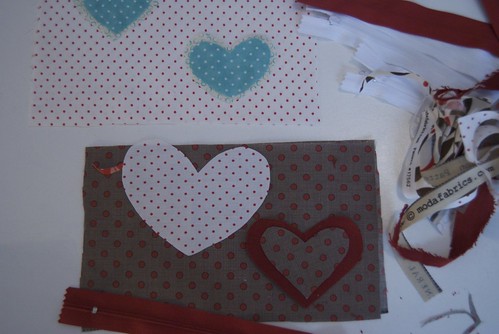
Cutting for Valentine Pouches

Last fall, as I dove deeper and deeper in the making things and sewing for Seedling Design, I learned a lot about what it was like to work at home for myself and be creating full time. For all of the successes and triumphs, there were (and still are) just as many mistakes and failures. I have found that when working alone is it easy to imagine that I am the only one who struggles to focus and create a routine. I'll pretend that I hear you chiming in and pointing out that you sometimes have the same problems. I know I am not alone in this and I know that there are plenty of resources and ideas out there for how to improve and forgive yourself as you work (a few that I've seen recently here, here, and here).

As I worked away at my sewing, writing, and photography, I wondered what it was like for others working in their creative spaces. Although it is easy to be connected to so many creative people through the internet, a lot of what we see is the finished product. We rarely witness the mistakes and messy details that are so much a part of the creative process. It's not that I want you to see me wrestling with my sewing machine when it isn't working properly, angrily ripping out a seam that I botched, or tossing out a loaf of bread that is more like a rock. But creativity is a process that is as challenging as it is rewarding.

I wanted to know that I wasn't alone in in the meanderings of creativity. I wondered what it was like in other people's creative spaces. So, I decided to go straight to the source. Starting this week and continuing for several weeks, I'll be posting an interview with a creative woman every Friday. I am very honored and excited that so many writers, crafters, cooks, and bloggers were willing to share their thoughts with me and with all of you. I hope you will find as much inspiration as I have from their answers to my questions. I also hope that each interview will be an opportunity for a dialogue and conversation (in the comments section) where we can share our own thoughts and experiences on creating.