I was recently talking to a friend who is expecting her first baby in a few months. She mentioned that she didn’t want everything to be about the baby, which is totally understandable. Pregnancy is unique and special and yet totally mundane, an ordinary occurrence of biology and a small miracle that I hope she will celebrate a little bit. We all have our own experiences but there must be few parents who think, I hope everything changes. Maybe none. The rest of us keep telling ourselves that everything doesn’t have to.
Somewhere in the midst of the changes, the mourning of the life you had before the baby came, attempting or succeeding at keeping up with the things that are important to you in addition to parenting, you find your new normal. At least, I think you do, but I am still finding mine. While you are busy settling in and accepting that things have changed or trying not to admit that things have changed, the change happens. I still do a lot of cooking, most of the time with my three year old side kick standing on a chair pulled up the counter. No more than two inches away from me, sometimes pulling on my skirt, he is always eager to help stir and would like to taste everything. Often we are serenaded by the baby, bouncing in her seat on the floor. It won’t be long before she wants to be at the counter, too.

The kitchen is still my primary creative outlet. Yesterday, over several hours, we made sourdough bread, pesto, granola bars, buttermilk dressing, and blueberry cake. But most of our meals are simpler than when I used to cook without interruption. I still occasionally take on a post dinner and bedtime kitchen project, but I’m not planning to do any canning this year. I know I’ll do more in the future, but I do feel that sense of let down that I’m not living up to my pre-babies life. I am officially a master food preserver but I really hadn’t thought about doing any food preservation this summer. Our garden, however, had a different idea. Two weeks ago we picked close to twenty pounds of tomatoes and I’ve made nearly every zucchini recipe that looks good. Before the plants slowed way down, I managed to tuck some of the abundance in the freezer.
So much of life is realizing that you are not in control. You can a years supply of salsa and then, pregnant, you are repulsed by anything with tomatoes. The garden does better than you could imagine one year, the next many of the crops could fail. You do your best to be a good parent, hoping to shape your children and your life but they shape you instead: pushing a bit there, softening here, rubbing the hard spots raw, pinching, stretching.

If you have an abundance of fresh summer produce and a shortage of time, freezing is an ideal way to store it. It's not as romantic as canning but it is much easier. Here are a few tips to help keep your frozen produce fresher and tastier.
Get your freezer ready Food stored at 0 degrees F will keep for a year but the warmer your freezer is, the faster the quality of the frozen food will deteriorate. At 10 degrees F it will only keep for three months. Make sure your freezer is set to 0, you can check the temperature with a simple instant read thermometer. A full freezer is more efficient than an empty one. Add a gallon jug full of water to the freezer to help keep it cold in case you lose power. You can safely freeze about 2-3 pounds of food per cubic foot of freezer space within 24 hours.
Get your food ready Some foods freeze better than others. Freezing changes the texture of fruits and vegetables so they won’t be the same as fresh. Most berries and fruits can be frozen as is. They will be softer when you take them out, but flavor will not be compromised. Most vegetables need to be blanched before freezing to ensure that they will be completely mushy when you want to eat them. Some things, like lettuce, are not meant to be frozen. Freeze only what you know you will use, otherwise you are wasting time, energy, and freezer space.
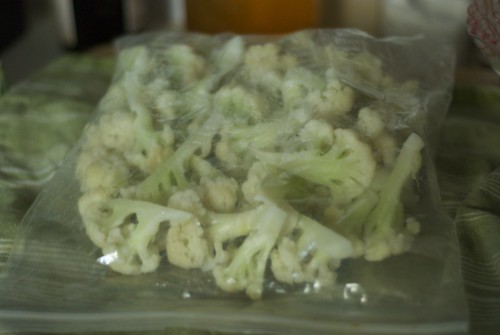
Get the right containers I often freeze produce in quart mason jars, just make sure to leave a little head space because things expand as they freeze. I also use plastic freezer bags but you can use anything that is airtight, moisture and vapor resistant, and easy to mark with the contents and the date you froze them.
Know what’s inside In addition to labeling containers of frozen produce, I try to keep an updated list of what is in my freezer. It is helpful to know what you have in there so you can make the best use of it and use it up within a year.
A few other ideas You can freeze raw tomatoes whole in an airtight container. After frozen, you can run them under water to remove the skins. They can be used for soups, sauces or any other way you would cook tomatoes. Freeze grated raw zucchini for use in soups or sauces or, as I do, for enchilada filling. I freeze my pesto in jars so I can use one at a time but you can also spread a thin sheet in a freezer bag which takes up minimal space and allows you break off just the amount you need. When I buy fresh summer corn, I always buy a dozen ears, cook them all, and cut the corn off the uneaten ears to freeze.
The National Center for Home Food Preservation is a great resource for specific freezing instructions.
What do you put in your freezer?