October 27, 2011
Coziness
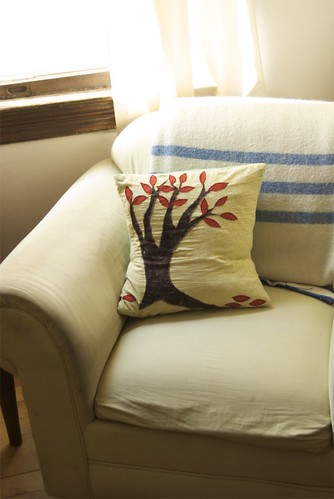
I had time this week to do some fall cleaning. Unlike spring cleaning, which is all about opening things up to let in new air and light, fall cleaning is about making a space to settle into. I organized our closets and made some needed changes in our the apartment. I'll be spending more time here each week and I want our home to be comfortable and cozy. It's amazing how little things (like moving the recycling bin out of the kitchen, or bringing a colorful quilt out of the closet) bring newness to the space.
I realized sometime this year how important coziness is to me. Unfortunately I think the word itself evokes silly decorative pillows and oppressively scented candles when what I actually want is more like wool sweaters, down quilts, and loving hugs. Of course, there is more to it than just physical warmth and comfort. I've recently come across a concept of coziness in some European countries, called hygge in Denmark and gemutlichkeit in Germany. I love that this idea of creating a warm space for the spirit is something that other cultures value highly. There is no equivalent term in English, but I think we all understand the feeling. It's not just about being warm or having a comfortable spot to sit. It's the idea of quality time with people you care about, making new connections, sharing meals and intimate conversation.
I definitely hope to find and create a lot of this coziness as we head into winter. As I filled all those jars this summer, I was thinking about the bread I would bake and the friends who would join us to share some cozy meals. I also hope to find time to knit (maybe a sweater? or pillows?), drink homemade chai, practice my fiddle, and take more walks. How are you creating coziness this time of year?
October 25, 2011
Preserving 2011
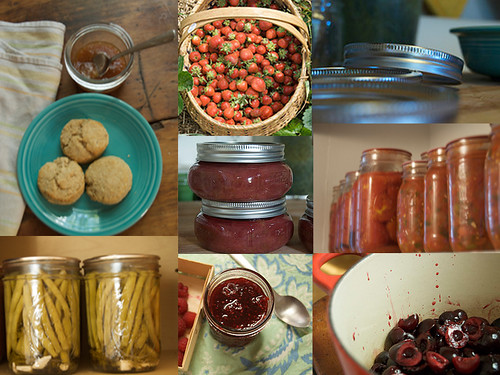
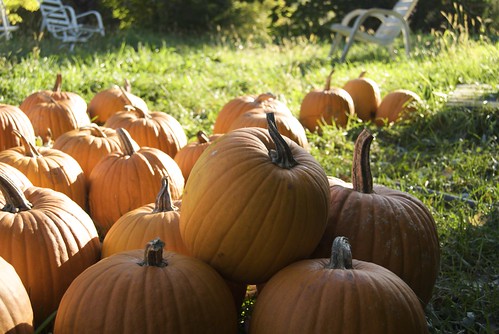
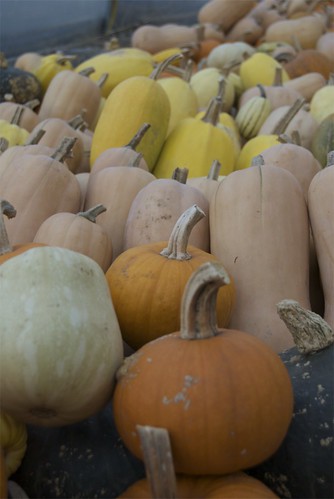
I've finally finished my canning projects for this year's growing season. The nights have gotten much colder and it won't be long before the days stay cold, too. I won't have a woodstove to huddle near this winter, but there is a lot of warmth stored in all of these jars. This week is my last working at the farm and I keep thinking to myself, Wasn't it just hot and sunny August? Wasn't I just picking pounds and pounds of beans? Then I remember the frost that came in early September, the shorter days, bringing in all the squash, digging the last of the potatoes, picking all the peppers before they froze. The months fly by every year, but I am glad to have been part of this growing season. My memory of the days is blurred, but being out in the field let me measure the passage of time by the growth of leaves and fruit and the tilting of our hemisphere toward and away from the sun.
I have mentioned before that my canning and preserving was also a blur, but the filling of jars was another way to mark summer's fruition. We have already emptied a few, even though I tend to want to make these stores last as long as possible. This year, with an abundance of full jars I am determined to let go of this miserly tendency. I stored up all this food so we could continue enjoying the abundance of summer and I resolve to eat and share it as often as possible.
As I was rearranging the cupboards last week, I had to laugh at myself. All this food stored up, when I live a block from a food co-op, generally just cook for the two of us, and know that Ray would rather eat out for every meal than rely solely on our full homemade pantry. But whether or not we get totally snowed in all winter, we'll eat well and I'll enjoy knowing that so much of my labor has gone into feeding us.
Last year I posted a list of what I had preserved and it was very useful for me to look back at, so I figured I would do it again. Aside from all the tomatoes, my canning seems to be fruit preserves and jam heavy. Fortunately I also filled the freezer with vegetables and some fruit. I also brought home 20 (plus) pounds of winter squash, 20 pounds of potatoes and lots of onions and garlic from the farm. And I canned: 15 quarts whole tomatoes, 21 pints salsa, 9 pints dilly beans, 2 pints pickled beets, 3 pints beet chutney, 2 pints Asian plum sauce, 3 half pints plum jam, 5 half pints tomato jam, 5 pints pears, 4 half pints raspberry preserves, 4 half pints raspberry jam, 4 half pints rhubarb jam, 5 half pints apricot rosemary jam, 8 half pints peach butter, 4 half pints cherry and black pepper preserves, and finally 5 quarts of apple sauce.
October 21, 2011
Last of the Garden
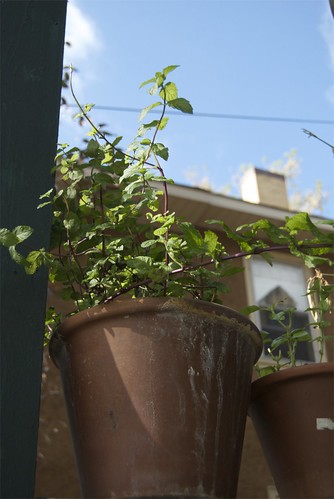
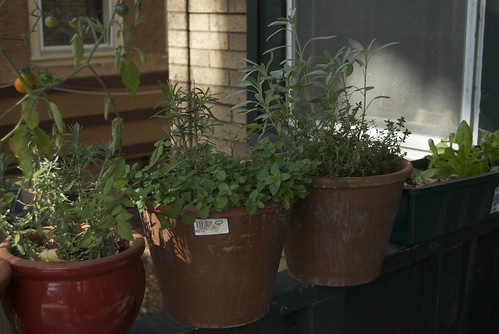
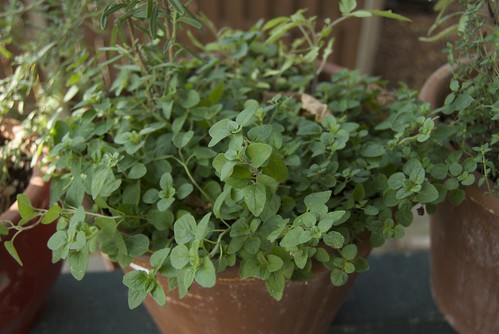
My container garden is nearly done for the year. The temperatures at night have regularly been in the 30s, so I decided to harvest my herbs and dry them. After I cut them all, I realized that they might have done okay in pots inside. They still could, I suppose, but we don't have ideal light indoors for plants that need lots of it. I know I posted about drying herbs a while ago, but now I need good ideas for how to store the small quantities that I have dried. I have a few small jars, but the amounts of dried herbs might not fill a jar. I'd still like to be able to keep and use what I have. Any suggestions?
October 19, 2011
Apples to Sauce
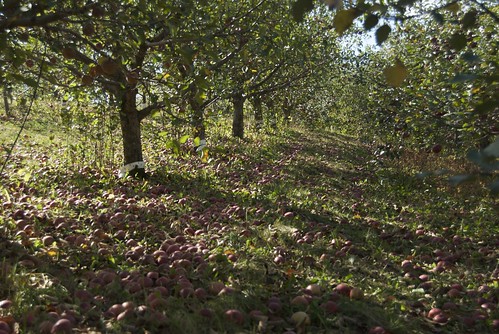
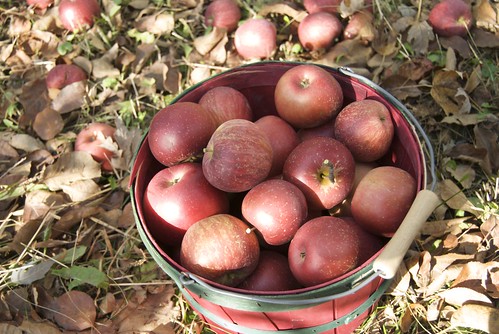
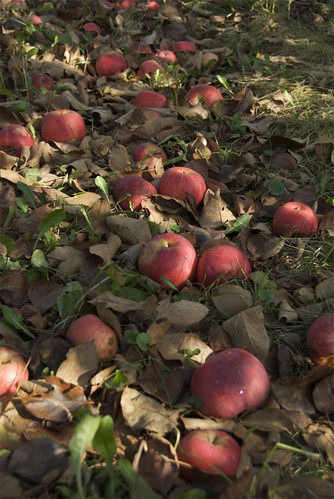
After traveling for eight days, seeing as many family and friends as possible, eating good meals, enjoying good company, relaxing, going to the theater and the aquarium, driving a lot and enjoying the last bits of summer weather, it took a few days to settle back into home. While getting back to everything that I need to do here, I decided it was time to gather apples and make some sauce.
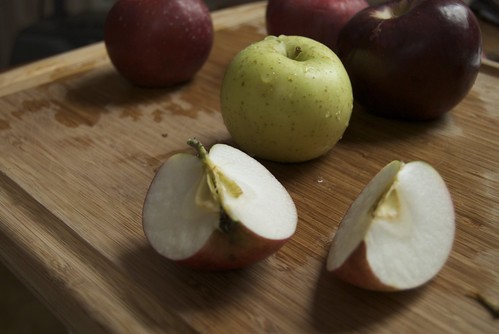
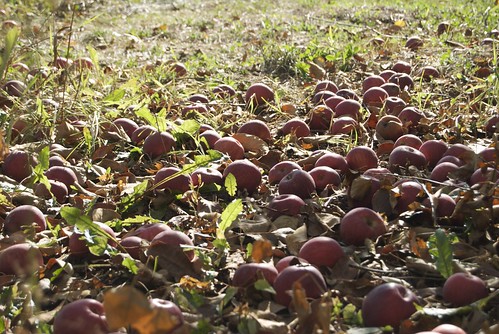
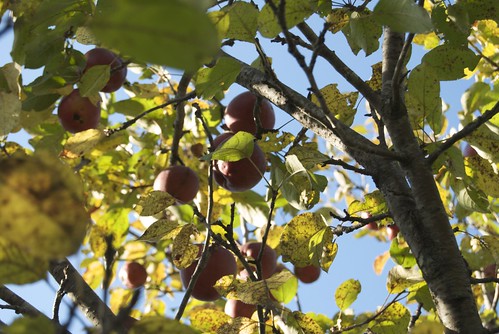
I drove out to Sweetland Orchard to pick. Before I visited the trees, I sampled some of their apple varieties. I love that each one has its own flavor and texture, some are better for baking while others are perfect for eating as is. There is also the history of each type of apple which is often reflected in their names and the location where it was developed or grows best. Some of the varieties that I found commonly in Maine, like Macoun, aren't grown here. Honeycrisp is probably the Minnesota favorite, but I prefer white fleshed, sweet-tart apples like Cortlands.
I'm starting to sound like an apple nerd, and I hardly know anything about the many many types of apples. It just happens that apples are a good example of the subtle or great difference that often get overlooked in the produce aisle. With mass production and shipping of fruits and vegetables, most varieties are chosen because they survive during long distance travel and last well on the shelves. We forget about the differences which have been homogenized by large scale farming and loss of diversity. Heirloom fruits or vegetables have been grown in very specific regions or for flavors and textures that might be different than their close relatives. You might never taste the best tomato or peach grown elsewhere because they don't ship well, but you might be able to find the best tomato or watermelon that grows in your region.
Apples remind me of these subtle differences. Although they all have the same delicious crunch and juiciness, a fall apple is not just an apple. It's a Haralson, a Regent, a Macintosh, a Fireside, a Connell Red. One is sweeter, some are better for baking, one stores for longer. Of course, when I make apple sauce they all go together in one pot. But each one adds something different and they all come together for a more flavorful sauce.
Apple Sauce
I know you probably don't need a recipe for this, but I thought I would include it anyway. I usually can some sauce in quart jars for good winter eating. I cook the apples whole and use a food mill to puree them and remove cores, skin and seeds. If you don't have a food mill, remove the cores before cooking and remove the skins before you cook them if you want a smoother sauce.
apples
a splash of water or apple cider
optional: cinnamon sugar or honey
In a large heavy bottomed pot, put a little bit of water or cider. Place this on the stove over medium-high heat. Cut the apples into quarters and throw them into the pot as you go. Stir every few minutes to keep the apples on the bottom from burning. Once you have added all of your apples, bring the pot to a simmer. Continue simmering the apples until they are all completely softened and you can't see any quarters of apples. Different varieties will require more or less time to break down. Once all of the apples are soft and cooked, place the food mill over a large bowl and fill it with the hot apples. Run the apples through the food mill until they are all pureed into sauce.
Now you can add cinnamon or other spices to the apple sauce. I never add sugar to my sauce, but you can sweeten the sauce at this time. The sauce will keep, refrigerated, for several days.
If you want to can the apple sauce, return the pureed sauce to the stove. For every quart of sauce you have, stir in a tablespoon of bottled lemon juice. Prepare your canning pot and quart jars. Ladle the hot apple sauce into the jars, remove air bubbles, wipe rims and cover with lids. Process for 20 minutes in a boiling water bath. For more information the canning process, visit the National Center for Home Food Preservation.
October 7, 2011
A Bang of Bright Colors
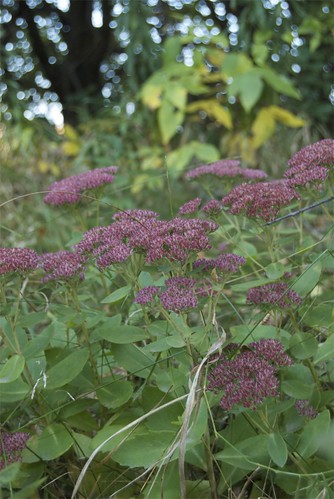
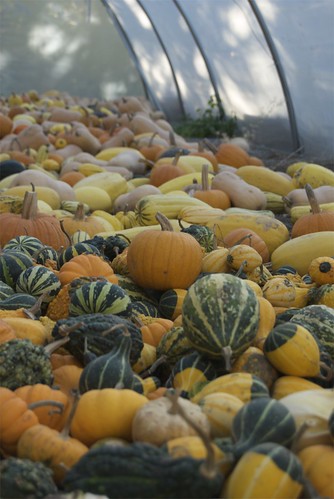
I love the way the world becomes more vibrant just before all the leaves are gone. Everything seems to end with a with a bang of bright colors. This may leave us unprepared for the bleak cold winter but I just try to soak it all in. I also wish I could keep save some of the unseasonably warm weather we had this week for when I need some heat and sun in January. What do you want to keep with you from this season?
October 5, 2011
Red Pepper, Goat Cheese, and Basil Frittata
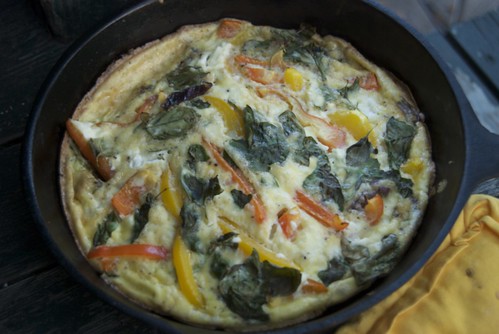
I'd like to introduce you to the frittata. Perhaps you two are already acquainted? We haven't known each other for long, but it's been my recent companion when I'm making dinner for myself. We also meet for the occasional breakfast or late lunch. Though we've seen each other a lot lately, there are so many possibilities that I'll never get bored. The frittata is more laid back than a quiche, lighter and less fussy, too. It takes minutes to make, which is ideal on the nights when you want something satisfying but you can barely be bothered to cook. It can go from rustic to sophisticated and makes for a rich but nutritious meal. I could go on and on, but I'll leave you with the recipe so you can try it yourself.
Red Pepper, Goat Cheese and Basil Frittata
I have an eight-inch cast iron skillet which fits this frittata perfectly. I eat some for dinner and finish the leftovers for breakfast. If you don't have a skillet this size, you could add more eggs or just end up with a thinner but larger version. I definitely recommend making this in a cast iron skillet to keep it from sticking. You can take the basic recipe and add any vegetables, cheeses or herbs that you like.
1 small red bell pepper
1 small onion
5 eggs
salt and pepper
1 tablespoon butter
1/4 cup soft goat cheese
several leaves of fresh basil
Turn on the oven to 400'. Cut the pepper into thin slices and cut those slices in half if they are too long. Thinly slice the onion. Crack the eggs into a bowl, season with salt and pepper, and beat until frothy. Place your skillet over medium heat. When the skillet is warm, drop in the butter. After the butter melts, drop in the onions and saute until very lightly caramelized. Add the peppers and saute for a minute. Pour in the eggs. Gently make sure the vegetables are evenly distributed. Crumble the cheese over the top. Rip the basil leaves into smaller pieces and sprinkle on. Continue cooking the frittata on the stove until the sides are lightly browned and pull away slightly from the skillet (2-3 minutes). Place the skillet in the oven and bake for 10-15 minutes until the frittata has puffed up and is completely cooked through. Serve warm or at room temperature.
Subscribe to:
Posts (Atom)