November 30, 2011

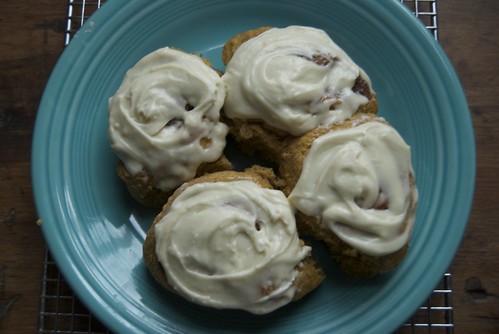
Pumpkin Spice Rolls

DSC_0047

November tastes of cinnamon and spices, hearty roots baked creamy, soup full of leeks. In my mind, November is the color of fallen oak leaves while December is the deep green of a hemlock bough. The autumnal spiced cakes and breads, the rustic pies of November will soon give way to chocolate and peppermint, delicately crunchy cookies and the flavors of Christmas. I still have six butternut, one spaghetti and a few acorn squash in my cupboard and I'll be eating squash well into next year. But in December, my focus turns away from fall recipes to make room for the season of sparkly lights, hot cocoa, and plates of cookies.
DSC_0046

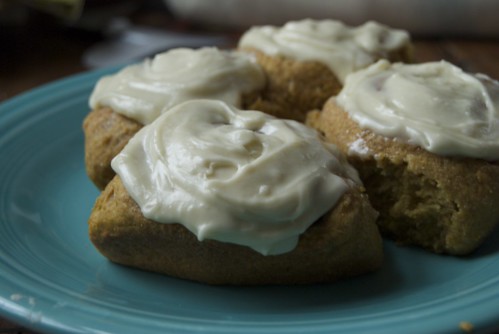
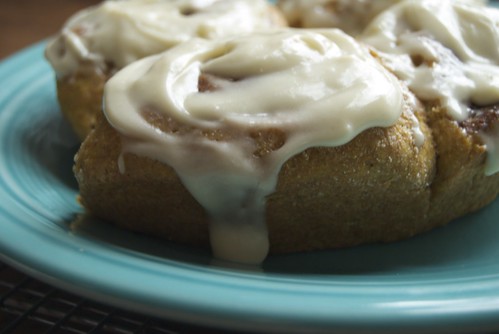
If I'm to hold true to these seasonal prejudices, then today is not too late to share one more squash flavored recipe. While I get caught up in recipes and meals that are seasonally appropriate, I really like the idea of recipes that show up once or twice a year for a certain, special occasion. In our household, which consists of me and Ray, we don't yet have many traditions but I wouldn't mind making these pumpkin spice rolls into one. They could easily be part of any old breakfast, but I want them to be a special treat.

I dreamed up this combination after I made a pumpkin cake to take to our friends' house. I made too much cream cheese frosting and had left over baked squash as well. I haven't iced a cinnamon roll since I was just tall enough to reach the toaster oven and pull out the Pillsbury version, but somehow I decided that was how the icing should be used. Not for those perfectly round rolls that popped out of the can with their plastic cup of icing, but for rolls filled with pumpkin and flavored with pumpkin spice.
DSC_0056


Pumpkin Spice Rolls
I adapted this recipe to make these rolls. The dough has pumpkin in it and instead of cinnamon, I made a blend of pumpkin pie spices to fill the roll. You do not have to make this recipe all at once. I have included various stages when you can refrigerate the dough and use it later.

1/4 cup lukewarm water
2 teaspoons yeast
3 tablespoons sugar
1 1/4 teaspoons salt
1 cup pumpkin or squash puree
1/4 cup plain yogurt
1 egg
3 tablespoons unsalted butter, melted
1 3/4 cups (7 ounces) whole wheat flour
1 1/4 cup (5 ounces) white flour

2 tablespoons butter, at room temperature
3 tablespoons sugar
1/2 teaspoon cinnamon
1/2 teaspoon ground ginger
1/4 teaspoon nutmeg
1/4 teaspoon allspice
1/8 teaspoon cloves

Place the water and yeast in a medium bowl and let stand for a few minutes to dissolve. Whisk in the sugar, salt, pumpkin, yogurt, egg and melted butter. Add the flour, 1/2 a cup at a time, using your hands to knead it when it is to thick to stir. Knead the dough until it is smooth and all the flour is incorporated. It will be sticky and somewhat soft.  Let the dough rise, covered, in the bowl for about an hour. At this point you can cover the bowl so it is airtight and leave it in the fridge for up to 4 days.

When you are ready to assemble the rolls, butter the bottom of a 9-inch round pan. Spread the dough out on a lightly floured surface. Doing this on parchment, plastic wrap or a silpat will make it much easier to roll the dough up. The dough should be spread or rolled into a rectangle about  9 by 12 inches. Spread the softened butter over the surface of the dough. Mix the sugar and spices together and sprinkle that evenly over the buttered surface. Begin rolling up the dough at the long edge, using the parchment (or whatever you have) underneath to help roll the dough into a long rolled up log. Pinch the open end of the roll to the rest of the log. Carefully cut the log into 7-10 equal slices and place each slice spiral up in the round pan. Cover and let rise for 1 hour.

Now you can cover the rolls and refrigerate them overnight, or continue baking.

Preheat the oven to 350. Bake the rolls for 25-30 minutes or until they are lightly browned on the edges. They will feel solid on top, but slightly soft underneath and a fork poked in them will come out clean. Let them cool in the pan for about 15 minutes, then remove and frost, if desired.

Cream Cheese Frosting
3 tablespoons unsalted butter, at room temperature4 ounces cream cheese, at room temperature 1 teaspoon vanilla extract 1 1/2 cups confectioners' sugar1 to 2 tablespoons milk, if needed, to make the frosting spreadable 

Combine the butter, cream cheese and vanilla in a medium bowl and beat them together until they are light and fluffy.  Add the sugar gradually, beating well. Add the milk a little at a time until the frosting is spreadable. 

November 28, 2011

Relaxed and Productive

Thanksgiving 2011


I've decided that Monday is the new Sunday. Which explains why this post is appearing late in the day and not first thing Monday morning as I would have liked. I am generally a first thing Monday morning type of person. I like to be prompt and organized. I usually have a very long to do list at the start of the week and on Monday I feel a great deal of pressure to get it all done. I almost always work at my restaurant job on Saturdays, and often on Sundays too. On these weekend days I ignore my list, but I still go to work. When I am working at home, the first day of the week becomes a struggle between my need to be productive, my wish to accomplish everything, and the difficulty in starting the week off running.

I always have high hopes for Monday morning, but I think it's time to lower my expectations. I'm okay with easing into the week and taking more time today to get organized and start projects, but maybe I won't get very far. I'm not the greatest at finding this balance but as I think about the added holiday projects on my list I want to make sure to enjoy the process. What are you doing to find balance in this busy time of year?

Thanksgiving 2011


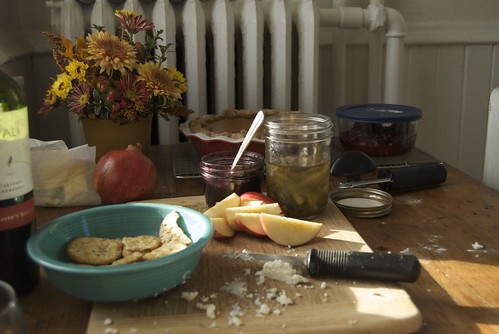
Our Thanksgiving day was very relaxed, but we balanced that with cooking (which was also relaxed and productive as you can see above). On the way back from our morning walk, while pie crust chilled, I envisioned with the salad we would eat. It combines good fall ingredients into a warm salad that is hearty but not heavy, a nice contrast to many Thanksgiving dishes. Since squash, cranberries and walnuts are all still in season, I wanted to share this recipe which is good on a holiday or any day.

Winter Squash, Cranberry, Walnut and Arugula Salad
The sweetness of the squash (I used butternut) and the maple mustard vinaigrette balance the tartness of the cranberries nicely. I normally like my salads lightly dressed, but I like this one a bit more heavily coated. We had mac and cheese for our meal, so I didn't add cheese to this salad but some crumbled goat cheese or grated parmesan would work very nicely in it.

2 cups of peeled and cubed winter squash
1 cup whole cranberries
cumin and cinnamon
salt and pepper
1 cup walnuts
2-3 cups arugula

2 tablespoons olive oil
1 tablespoon apple cider vinegar
1 teaspoon grainy mustard
1 tablespoon maple syrup

Place the squash in a pot, cover with water and simmer until the squash can be easily pierced with a fork. Drain the squash. Bring a cast iron skillet to medium heat. Add a small amount of olive oil or butter and add the squash. Cook, stirring occasionally until the squash cubes begin to brown. Add a small sprinkle of cumin and cinnamon as well as salt and pepper. Pour in the cranberries and continue cooking until the cranberries are hot and some of them have lost their round shape. Pour the cooked squash and cranberries into the bowl you want to serve them in. Roughly chop the walnuts and toast them in the pan same pan. When they are toasted, add them to the bowl. Toss in the arugula.

Mix the olive oil, vinegar, mustard and maple syrup, whisking to emulsify. Toss the amount of dressing you would like with the rest of the salad. Serves 2-4, depending on whether it is a main dish or a side.


November 23, 2011

Thankful

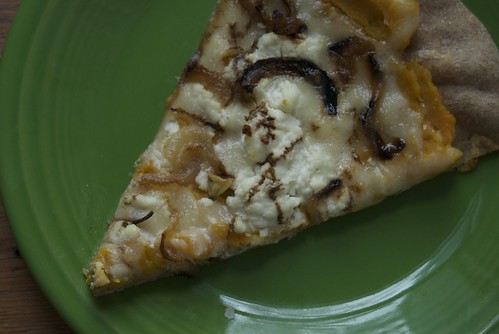
Winter squash, goat cheese and caramelized onion pizza


I have a lot to be thankful for. I try to remember this and keep gratitude nearby, but I know that there are lots of times when it is easier to be frustrated or discouraged than to remember how very lucky I am. Perhaps it isn't luck, but somehow I've wound up with an amazing husband, a loving and supportive family, the chance to do lots of creative work even if it's not yet how I make my living.

I give thanks for the small, but important, things like the down comforter that keeps me warm every night and the things that seem insignificant but that really matter (to me), like all the food we have stored for the rest of the winter. There are cold snowy days that let me be cozy inside, cups of tea, good books and blogs to read, rediscovering knitting and the chance to take more yoga classes. It is crazy how many good things I have in my life and somehow even the challenging things usually turn out okay.

I'm so thankful that there are some of you out there who want to read this, and for the opportunity that this blog has given me to learn more about writing, photography, and the online world. None of this is directly related to that delicious slice of pizza, although I am immensely thankful to have discovered the combination of winter squash, goat cheese, caramelized onions and balsamic reduction that it is made up of.

I know that you are probably thinking more about turkey and pie than pizza and you might just be eating left overs all weekend. But if you happen to be with family or friends for a few days and you are the type (like me) who likes to share lots of time in the kitchen with loved ones (or cook for them), maybe some homemade pizza is in order.

I hope you have a wonderful Thanksgiving!

Winter Squash, Goat Cheese and Caramelized Onion Pizza 
I make this one a lot in the fall and winter. It has similar elements to the beet pizza I told you about a while back. I guess I just love the combination of a sweet vegetable with tangy goat cheese and chewy mozzarella.You can use any kind of winter squash (except spaghetti) even leftover mashed squash from you Thanksgiving feast. Here is the basic idea, you can adjust everything as you like 

Pizza dough 
1 small onion
balsamic vinegar
1 cup pureed winter squash (bake the squash and mash it or run it through a food mill so it is spreadable)
chevre style goat cheese
shredded mozzarella
chopped rosemary (optional)

For the caramelized onions: cut off the each end of the onion, cut the onion in half and thinly slice each half. Place a saute pan (I use a small cast iron pan) over low heat. Add a splash of olive oil and the onions. Cook the onions slowly, stirring occasionally so that they slowly brown but don't burn.

For the balsamic reduction: pour 1-2 cups balsamic vinegar into a sauce pan (the reduction keeps well and is a nice addition to salads, pizzas, risotto and a variety of meat dishes so you can even reduce a whole bottle at a time). Bring the vinegar to a gentle simmer and continue simmering until it has s syrupy consistency. If it gets too hot it may burn or reduce too much so that it is not pourable. When it is syrupy, remove from heat. I store it in a jar in the fridge for months, it is more pourable at room temperature.

Put it all together: Preheat the oven to 450'. If you are using a pizza stone, you'll want the oven to be hot for at least 30 minutes or more to get the stone nice and hot. For pizza on a pan it is not as crucial, but a good hot oven is ideal for pizza.

Shape your pizza dough as desired. Spread the squash on top of the dough, like you would a sauce. Crumble the goat cheese and spread it out across the pizza. Sprinkle on mozzarella. Distribute the caramelized onions around the pizza. Sprinkle on the rosemary if desired. Bake in the oven for 10-15 minutes or until the cheese is melted and a bit bubbly and the crust is crisp (or however you like it). Remove from the oven and drizzle a garnish of balsamic reduction on top. Let the pizza cool for a few minutes before cutting and serving.

November 22, 2011

This Week in the Studio

5-ornaments2

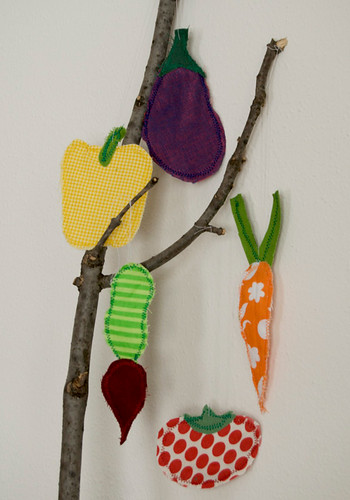
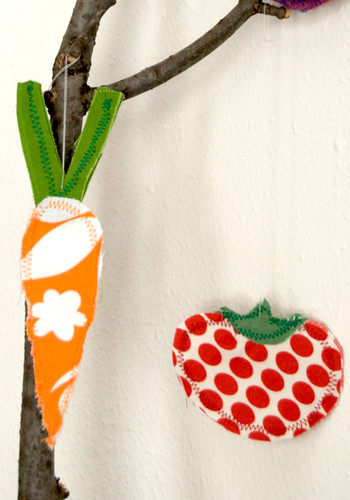
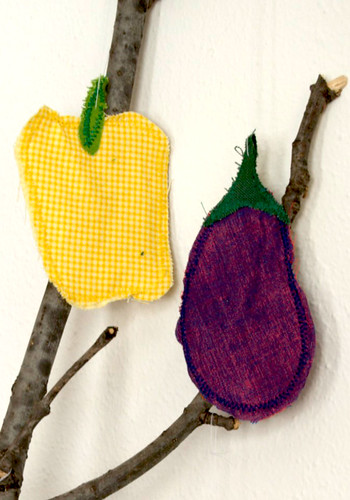
Earlier this week, I made a few sets of vegetable ornaments. I made a bunch two years ago for a holiday sale and thought it might be fun to make a few this year. They're just like the veggies on my aprons and bags, but they are two-sided.

4ornaments3

I normally try not to think about Christmas until it is December. This year, though,  I have started thinking about Christmas quite a bit earlier than usual. I've realized that time goes by so fast and it is more fun to have plenty of time to prepare for and enjoy the Christmas season. Thanksgiving deserves plenty of celebrating, I'm not trying to rush things. I am just happy to be in this season of holidays and looking forward to more preparations and celebrations.

4ornaments2


Two year ago we had a Christmas branch. Last year we hung our ornaments on the mantle piece of the (non-working) fireplace in our apartment. I'm not sure what we'll do this year. These ornaments don't have to be for a specific holiday, they are good for any festive time when you want a few more veggies in your life :)

I know that a lot of people call today black Friday, but I like the idea of plaid Friday. Have a good weekend!

November 21, 2011

Spiced Cranberry Sauce

DSC_0053


We had our first snow this weekend. Already it has turned gray and slushy, but the thin blanket of white on branches and roof tops feels festive. It seems like everyone is busy getting ready for Thanksgiving. If you are, I hope it is a pleasant list of plans and tasks without too much worrying or hurrying. For me, Thanksgiving has usually been pretty laid back, though the only time I've come close to cooking a turkey was when I brought one home after helping to harvest* them at Shelburne Farms.

When I was young we had big family Thanksgivings at my grandparents, the kids always had their own table away from the grown ups and Baskin Robbins ice cream turkeys for dessert. There was the year that we ran out of mashed potatoes before everyone had gotten food and the year after that at my Aunt's house when we were shocked that there were no mashed potatoes at all. But most of my Thanksgivings have been low key, cooking with family. Enjoying the company, the meal, a leisurely stroll and a board game with first or second helpings of pie.

This year Ray and I are again far from our families so it will be an even more laid back day of cooking and eating. Ray is making mac and cheese and I'll make some vegetable dishes. It can be hard to choose what to make and what to leave out. Even though we could eat all of these good foods any other meal of the year, it's hard not to want them all on the Thanksgiving table.  My step-father always suggests we have creamed onions even though no one else really likes them. Ray requires the can of cranberry sauce served still intact. There are the traditional dishes and those that might become tradition. This year we couldn't decide on apple or pumpkin so we will each make a pie and remember that that the day is about abundance and leftovers.

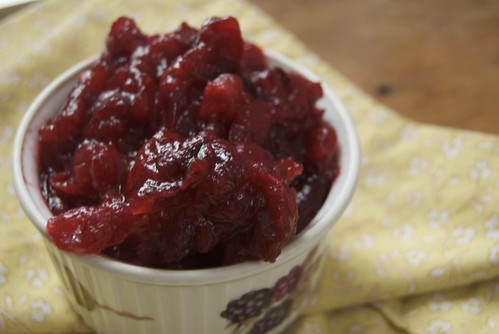
I made a spiced cranberry sauce which will never be shaped like a can, but it actually tastes like tart cranberries and sweet spices. I've been wanted a little cranberry sauce to add to my plate next to sweeter autumn dinners. It starts with whole cranberries and some sugar or honey and goes from there.

DSC_0033


Spiced Cranberry Sauce
I made two versions of this and liked them both, so there are options in this recipe. I think the basic formula for this is to add some sweetener, some spices and maybe some citrus zest. If you don't have whole spices, you can use ground spices but you might want to adjust the amounts to taste. You could use orange zest or even lime zest instead of the lemon. I hope this gives you the basic idea.

2 cups cranberries
water
1/4 cup honey or brown sugar (add more or less to your taste)
1 cinnamon stick
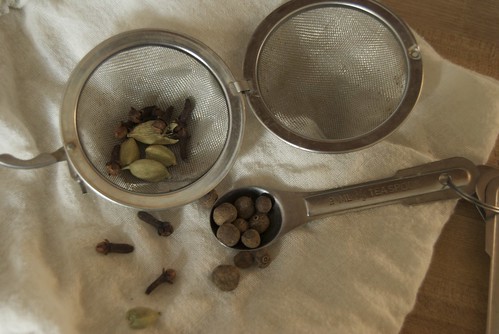
1/2 teaspoon whole cloves
1/2 teaspoon cardamom pods
1/2 teaspoon allspice
1/4 teaspoon grated nutmeg
1 tablespoon lemon zest or chopped crystallized ginger

Place cranberries, a splash of water, and honey or sugar in a pot over medium heat. Add the cinnamon stick. Put the cloves, cardamom, and allspice in a tea ball or tie them up in cheese cloth and them in the pot to infuse the cranberries with their flavor. Add the nutmeg. Bring the berries to a simmer and let cook for about ten minutes or until most of the cranberries are cooked, but some are still whole. Remove from heat and stir in the lemon zest or ginger. Let the spices infuse a few minutes more. Remove the whole spices and cinnamon stick. Serve at room temperature.


*I didn't want to say slaughter in the middle of my first paragraph about thanksgiving, but that's what we did.

November 18, 2011

This Week in the Studio

DSC_0070


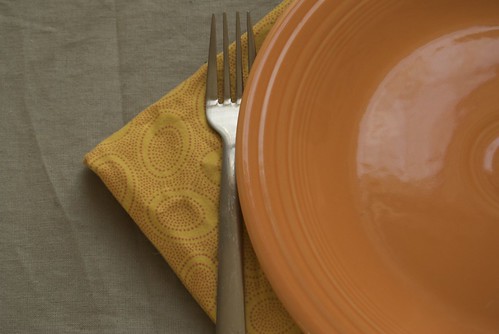
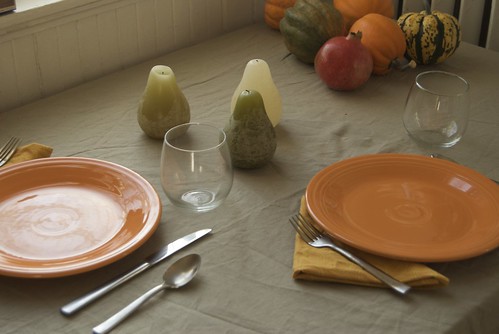
This week I did a quick project for our house. Using a piece of gray linen that I originally thought might become a skirt, I hemmed a simple tablecloth. I love the neutral, but beautiful, gray that compliments and contrasts the bright colors of our dishes.


DSC_0066


I was going to write up a more specific tutorial, but this is an incredibly easy project. I find it handy to use an iron to fold over the raw edge of the fabric and then fold it over and iron it again so there is no longer a raw edge. Then sew the folded edge. I sewed around with orange thread three times so there are three uneven and meandering lines of stitching. It isn't noticeable from the top of the table, but I love the look of lines of stitching.

DSC_0072


You can pretty much hem any piece of fabric to make a tablecloth. This one fits our table when only one leaf is open (which is how it is usually set up for just the two of us) and that works just fine. We don't use tablecloths often, but I am looking forward to using this for holiday meals or every day dinners. It's really nothing fancy, but it's fun to set a festive table mostly using what we've already got and makes our dinner table feel a little more special. Have you done anything lately to make your home more festive?

P.S. I am so happy to finally have lots of aprons in the Seedling Design shop! And you can now follow seedling design on twitter.

November 15, 2011

Chocolate Beet Cake

DSC_0014


DSC_0021


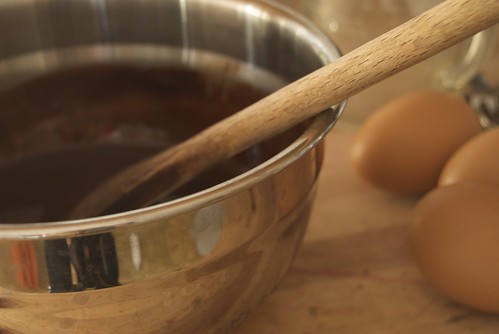
I've been thinking about a chocolate beet cake for at least several weeks. The first, and only time, I tried such a cake was the first time I celebrated Ray's birthday with him. I took him to a wonderful restaurant in Portland called Caiola's (if have a chance, you should go!). It was our first fancy dinner together. I remember the food quite clearly because of the amazing flavors we tried that night. For a starter, we had a parmesan cake with figs that we still reminisce about from time to time. I don't remember what Ray had for dessert, but I had to try the chocolate beet cake. The server described it as a moist chocolate cake, which sounded good, but I ordered it because of the beets.

DSC_0091

If you've read even a few of my posts you know that vegetables are important to me. I eat them as often as I can and they find their way into my sewing, too. Ray, on the other hand, could take them or leave them and usually he would prefer to leave them. It's sort of awkward since I love to grow, cook with, and write about vegetables all the time, but he puts up with my cooking and sometimes even enjoys it.

DSC_0098

I realize that I have a habit of putting vegetables into cakes. It's not that I can't get enough and have to eat them with my sweets, too, I just find these cakes intriguing and delicious. A chocolate cake doesn't need an added vegetable, but I just had to try one with beets. We don't think twice about adding squash to a cake or muffin, but this other sweet, durable, homely but lovely vegetable doesn't make it into desserts very often. I'm sure the beet will never replace the pumpkin as the official vegetable of Thanksgiving, but it deserves a chance to be part of dessert.

DSC_0104


Chocolate Beet Cake
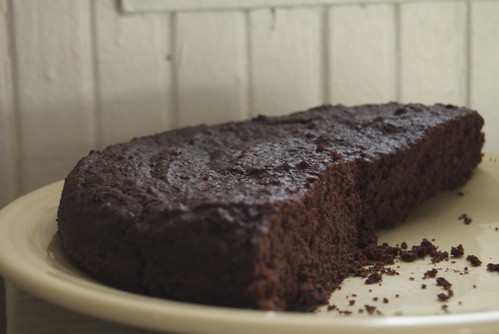
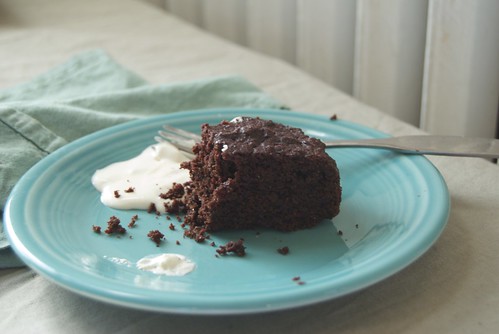
The cake has a subtle red color from the beets and is moist and very chocolatey. I adapted a chocolate cake recipe from the King Arthur Flour Whole Grain Baking Book and on the day of baking saw that David Lebovitz had posted this recipe which I took a few hints from as well. In my ideal world I would have made goat cheese ice cream to go with it, but instead I whisked up some creme fraiche whipped cream which complemented it very well.

2-3 medium sized beets, leaves and stems removed
4 ounces bittersweet chocolate
3 ounces (6 tablespoons) unsalted butter
5 ounces (1 1/4 cups) whole wheat pastry flour
1.5 ounces (1/2 cup) unsweetened cocoa powder
1 teaspoon baking powder
1/4 teaspoon salt
3 eggs
7 ounces (one cup) sugar

Butter a nine inch round pan and dust it with cocoa powder to cover the buttered surface.

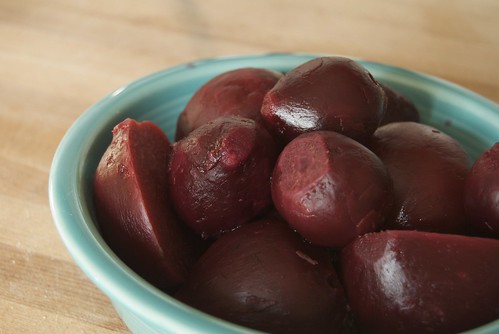
Scrub the beets clean and place them in a pot with enough water to cover them. Heat them on high until the water boils then simmer until they can be easily pierced with a fork (or you can roast them in to oven). When they are cooked, place them in a bowl of cold water until they are cool enough to touch and slip off the skins. Puree them in a food processor until they are in tiny pieces but not quite smooth and measure out 1 cup of beet puree.

Break the chocolate into small pieces and melt it in a double boiler or in a heat proof bowl over a pot of simmering water. When the chocolate is nearly melted, cut the butter into small pieces and stir it into the chocolate until both are totally melted. Let cool for a few minutes.

Sift together the flour, cocoa powder, baking soda and salt. Separate the eggs and stir the yolks and beet puree into the melted chocolate and butter. Beat the whites until the are stiff and beat in the sugar. Add the melted chocolate mixture to the egg whites and stir gently to combine. Fold in the sifted dry ingredients.

Pour into the prepared pan and bake for 30-35 minutes at 350'. Let cool and serve with creme fraiche whipped cream if you would like.

Creme Fraiche Whipped Cream
1/3 cup heavy cream
1/3 cup creme fraiche
1 tablespoon maple syrup

Whip the cream until it is nearly stiff. Stir in the creme fraiche and maple syrup. Spoon on top of, or beside, a piece of the cake.

November 11, 2011

Fermenting

DSC_0086


Fermentation involves creating the right environment for living organisms to transform ordinary vegetables or grains into something that is alive and more nutritious. These living organisms are already there ready to make this transformation, they just need the right ingredients and environment to thrive. It is easy to facilitate this change from an ordinary vegetable to a fermented one. With its unique flavor and softer texture, a fermented vegetable is easier for us to digest and beneficial to our health. 

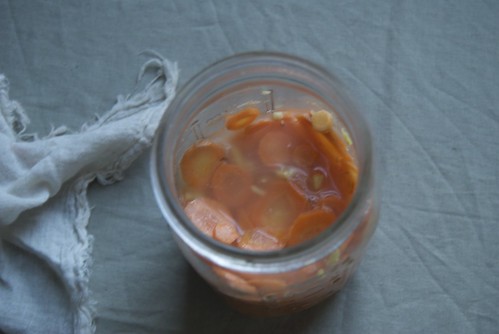
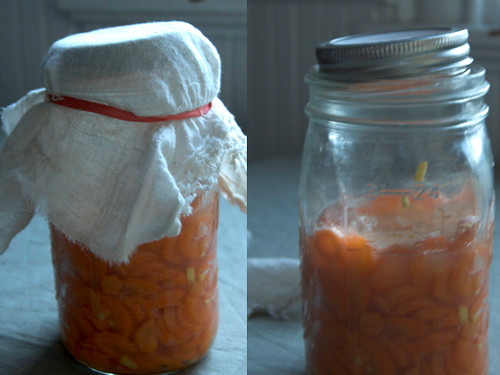
Last year I made Red Sauerkraut. I made a batch of it this fall, too, but I think I left it on the counter a little too long. I've got apple cider vinegar in process and just moved the pickled daikon from the counter to the fridge. Oddly, daikon was one of the first fermented foods that I ate regularly when I used to buy it from a natural foods store. We had a lot of these giant radishes growing at the farm and I didn't know what else to do with them so I made fermented pickles. Once the daikon was ready, I cut up some carrots which are now fermenting in a jar with ginger and, of course, salt. I admit that I love the process of fermenting, but frequently forget to eat the results. I am trying to add a little side of fermented vegetables to a meal every day.

DSC_0082


It may be a bit of stretch, but fermentation reminds me that it just takes the right ingredients or environment to change something for the better. As I have more time to work on projects and dream even more vividly of making my living creatively, I often struggle to find a balance between pushing myself to work hard and knowing when to let go.  I know that it takes work to achieve big goals but I'd like to think that we've all got what it takes to live our dreams. We just need to find the right ingredients, environment, and process to get there.

fermentation

Pickled Daikon
Pickling the daikon makes for a mild flavored slightly crunch radish. I don't use daikon a lot otherwise, but I enjoy the way it tastes when fermented. Fermenting also helps vegetables to last longer and can be kept in the fridge for a few months. I always think it is amazing the way the salt draws enough water from the vegetable to create a brine. If your daikon is less fresh, you might need to add a little more water and salt to cover it. Sometimes a bit of white mold may bloom on the surface during the fermenting process. This doesn't usually happen when fermenting in glass jars, but if it does, just scrape it off. If you have no interest in daikon or don't know where you can get it, I've included a recipe for fermented carrots and ginger below.

1 pound daikon radish
1 teaspoon salt

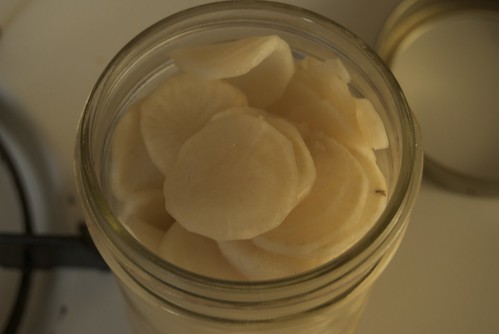
Slice the daikon into thin rounds and place in a bowl. Add the salt and mix well. Pack the daikon into a clean wide mouth quart jar, pressing down on it to force the water out. Once the daikon is solidly packed in the jar fill a clean half pint jar with water and screw the lid on tightly. The small jar should fit in the opening of the quart jar and rest on top of the daikon to keep it under water (see photos above). Use cheese cloth and a rubber band to let air in but keep flies out. For the first 24 hours, check it frequently and continue pressing on the daikon to push the water out. If water has not covered the daikon within a day add enough water and a little salt to cover the vegetable.

Keep the jar somewhere out of the way, but where you won't forget about it. Depending on the temperature, it will take about a week to ferment. Check it frequently, smelling or tasting it until it has reached the tangy taste that you like. When it is ready, store in an airtight jar in the fridge.

Fermented Carrots with Ginger
Adapted from Nourishing Traditions by Sally Fallon

2 cups of carrots, sliced into thin rounds
1 tablespoon ginger, finely chopped
2 teaspoons salt

Mix the ingredients together and follow the process above for packing into a jar and fermenting.

November 10, 2011

This Week in the Studio

It has been a while since I've shared anything that I've been doing with Seedling Design. I have been reluctant to post here too often about this creative business venture because this blog started out about food and personal projects. When I am not writing or cooking, though, I am often sewing new things for Seedling. I've thought about starting a separate blog but all of these things are part of what I do so I like keeping it all here. At this point I am unable to choose my passion for food over my love of creating with fabric or vice versa. While I wish this could be a simple and very focused blog, this space is a reflection of the things I care about and it is going to be imperfect just like me.

Anyway, I've decided to do a weekly update on what I've been working on in the studio.  When I say studio, it's really our project room that houses our desk, my sewing stuff, Ray's bike stuff and his kegerator (he brews a lot of beer!). Also not a perfectly focused and designed space, but such is life.

DSC_0028


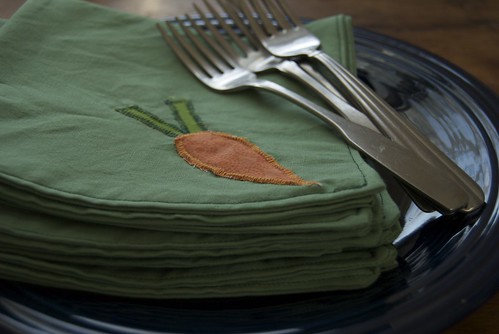
This week I finished several napkin sets. I find that I am drawn to similar colors -- greens, blues, orange. I have yet to discover whether people really want napkins in these colors, but I have been selling them throughout the summer. I'm excited to have more available before the upcoming holidays. I think they would be lovely for a hostess gift or on a Thanksgiving table.

bakingaprons


whiskapron


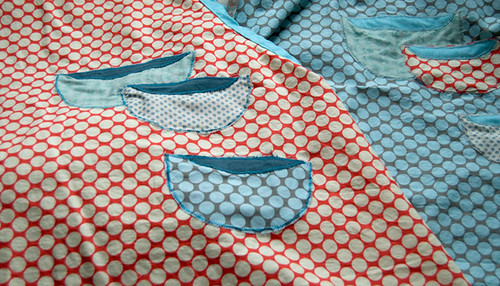
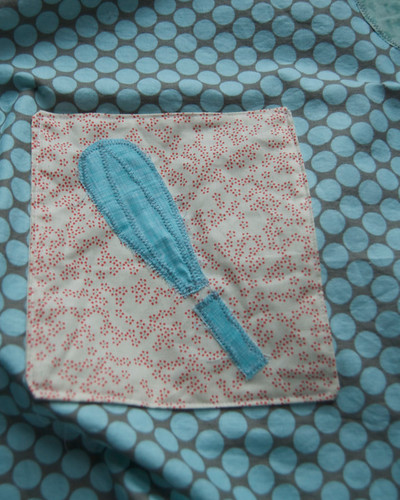
I also managed to start and finish two new aprons in one day. I love combining colors and patterns and figuring out the design of the applique. I don't have many aprons in my shop right now because I'm not able to photograph them by myself. I either need a model or someone else to take the pictures which I hope to take care of very soon.

This weekend I will be at the Handmade Arts from the Heart which promised to have a lot of beautiful handmade things and is also a benefit for the school. I love making these aprons, especially when they become a final product. I am looking forward to meeting people who also enjoy them and will use them and make them their own.

November 8, 2011

Apple Fritters

applefritters


I mentioned last week that fall flavors might be lacking here, but I've made up for that in my kitchen and I'll be making up for that here, too. I'm loving the combinations, colors, and contrasts of sweet squash with apple and ginger and bright green roasted broccoli. The heartier starchy vegetables alongside a crunchy slaw and a little salad with the last of our greens. The way the crunch of an apple can be cooked into something so soft. We might get snow tomorrow so I am content to spend more time inside with the many warm flavors there are to explore.

These fritters were inspired by a recipe for leek fritters in Plenty that I made a couple of weeks ago. I though they might be good with sweet fruit and spices. They are light and fluffy but have a slightly crispy outside. I used buckwheat flour for a change which I think pairs well with the apple and cinnamon. They are perfect topped with plain yogurt and a bit of maple syrup if you wish.

Apple Fritters
I like the way coconut oil gives the fritters a slightly crispy outside, but you could also cook them in butter.

3-4 small apples (for about 2 cups of grated apple)
1/2 teaspoon cinnamon
1/2 teaspoon powdered ginger
1/4 teaspoon nutmeg
3/4 cup buckwheat flour
1 teaspoon baking powder
1/2 teaspoon baking soda
1 egg white
1 egg
4 tablespoons butter, melted
1/2 cup buttermilk
Coconut oil for cooking

Grate the apples with the peels on. Place the grated apple and any juice in a bowl and mix with the cinnamon, ginger, and nutmeg. Stir the flour, baking powder, and baking soda together in a separate small bowl. Whisk the egg white until it has stiff peaks. Gently stir the egg white into the grated apple and spices. Whisk together the egg and the buttermilk and combine with the flour. Pour this batter and the melted butter into the apples and stir to blend completely.

Heat a skillet to medium and add a tablespoon of coconut oil. When the oil has melted, scoop a quarter cup of batter into the skillet. Cook for about two minutes and then flip. The top should be golden brown. Cook on the other side for two to three minutes or until the fritter is cooked through. Makes about 6 fritters.

November 4, 2011

An Hour to Do What You Love

DSC_0046


As I was thinking about this slaw and how and what to write about it, I realized that leaving you with a slaw for the weekend isn't very fun. This slaw goes very well with other fall flavors and makes a refreshing side to go with the heartier autumn dishes. Still, a slaw seems a bit stern and serious for the start of the weekend.

But, as I was thinking about how it would be better to leave you with a cake or something rich and savory, I remembered that we get a little extra time this weekend. At least, those of us in the United States and that observe day light savings get back the hour that we lost last spring. A whole hour to eat slaw or cake, rake leaves or run through them, find the sun or read a book under a blanket.

When this lost hour returns, I am reminded of the fall that I spent two months living in a tent in the Oregon woods. There was a straw bale house, too, and about 12 of us learning about many aspects of sustainable living, taking turns cooking meals, feeding chickens, milking goats, walking in the forest, and living in community. Somehow we had the right mix of people and circumstance to create the magical weeks that we shared.

On the weekend that daylight savings ended, a few of us traveled to Crater Lake. I remember the washed out blues, greens and sandy colors of the landscape. So many fir trees and and the turquoise water of the lake framed by the steep sides of the crater. We hiked, took pictures, cooked oatmeal on our rocket stove and stared at the clear, starry sky. In my memory they were simple and perfectly beautiful days. With few time constraints, we didn't bother changing the clock in the car when we started the drive home on Sunday. It wasn't until after we had stopped for lunch that we decided to use that extra hour. We reset the clock and despite the time we spent, the digital numbers showed that we hadn't stopped at all.

I treasure days with no agenda, with spontaneous adventures, with unplanned meanderings that are somehow perfect. Many weekends of my life have faded from memory, but this particularly one in Oregon is like a photo I keep tucked in my wallet and pull out to warm my heart. I always remember those close friends, the freedom we had to explore and the looseness of time on that weekend. Whether or not you set your clocks back, I hope you can find an extra hour to spend doing what you love. 

Kohrabi and Apple Slaw
This is a simple slaw that makes a crunchy, sweet and earthy side dish. The recipe makes enough to serve two to three people. If you have more kohlrabi and apples it is very easy to increase.

1 medium sized kohlrabi
1 medium sized apple
lemon juice
1 tablespoon olive oil
2 teaspoons grainy mustard
1 teaspoon honey
2 teaspoons apple cider vinegar
a pinch of salt

Peel off the tough outer skin of the kohlrabi and the skin of the apple. Slice both into thin matchstick size pieces. You can actually cut them into any shape you want, but it is best if all the pieces are about the same size. Toss the sliced apple with a bit of lemon juice to prevent browning

Combine the olive oil, mustard, honey, cider vinegar and salt with a whisk. Toss with sliced apple and kohlrabi.

November 1, 2011

Sweet or Savory

DSC_0018

Do you like your winter squash sweet or savory? I find myself debating the best way to use all the squash in my cupboards. Soup, with risotto, on pizza , roasted or in a cake, a pie, cookies, muffins, and pancakes. Butternuts, buttercups, and pie pumpkins (the small sweet ones, not the big ones we carve for Halloween) could used either way, though I think the acorns, carnivals and delicatas are better for dinner than dessert. Fortunately I have enough squash to try many recipes.

It's already the first of November and we've barely had any fall flavors here. First I was too busy with summer, though I brought you apples and the apple sauce a couple of weeks ago. Come to think of it, I did make a ginger pear cake and we've been eating plenty of roasted broccoli, brussels sprouts and potatoes with garlic. But some things have been seriously lacking: the spices that are so irresistible when the temperature drops and the leaves fall, too. The burnt sienna hue of sprinkled cinnamon (yes, I get my colors from crayola), the spicy scent of ginger, the familiar warmth of nutmeg, the dark hint of cloves. Combined, these make something like pumpkin pie spice and, I suspect, are responsible for a lot of what we think of as pumpkin flavor. These spices are lovely, but even better with some of that squash. I love the way the orange flesh compliments the spices and the vegetable taste contrasts subtly with all the sweetness.

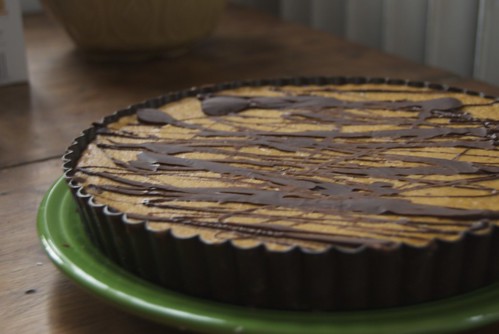
We had some friends over for a cozy autumn dinner this weekend and I wanted to serve something pumpkin for dessert. I didn't want to do the traditional pie, I don't have room in the freezer to make pumpkin ice cream and I was looking for something I could easily make gluten free. I don't think I've ever made a Martha Stewart recipe in my life, but when I googled pumpkin desserts her website appeared and opened up a vast array of autumn dessert recipes which all looked perfectly delicious. I settled on one that combined chocolate and pumpkin with complementary spices. I think I'll use the filling recipe for future pies. I didn't get to take a photo of the tart after slicing, it disappeared too quickly.

Pumpkin Chocolate Tart
Adapted from Martha Stewart

This tart is really not hard to make and can be made a day or two before you plan to serve it. For the crust, you can use all purpose white flour, whole wheat pastry flour or an all purpose gluten free flour mix. If you are using wheat flour you will need to treat the dough more gently so it doesn't become tough.

You can use canned pumpkin, but baking a pie pumpkin or a butternut squash is quite easy. Just cut the squash in half the long way and scoop out the seeds (roast them, too). Bake the squash for about 45 minutes at 350 until it is soft enough to stab easily with a fork. Once the squash has cooled, scoop the flesh out of the skin, discard the skin and use the squash.  

One more note: this recipe is for a 10-inch tart. I only have an eight inch tart pan. I baked the extra filling in a separate dish and it was very tasty. The eight inch tart is big enough to serve up to eight people.

For the Crust:
1 cup flour (all purpose, whole wheat pastry or an all purpose gluten free blend)
1/4 cup powdered sugar
1/4 cup unsweetened cocoa
1/2 teaspoon salt
1/2 teaspoon ground cinnamon
1/4 teaspoon ground cloves
4 ounces (1 cup/ 1/2 stick) unsalted butter
1 large egg
4 ounces semi-sweet chocolate

Measure the dry ingredients into a bowl. Cut the butter into small pieces and drop it into the dry ingredients. Use an electric mixer on slow speed to mix the butter into the dry ingredients until it resembles coarse crumbs or small peas. Add the egg and mix until the ingredients come together to form a ball of dough. Gently press the dough into the tart pan to form the crust. Chill for 30 minutes.

Preheat the oven to 350. Before baking the tart shell, prick the bottom with a fork. Bake for about 15 minutes. While the tart is baking, chop the chocolate into small pieces. When the shell is firm, remove it from the oven and spread the chopped chocolate onto the hot tart shell. If the chocolate doesn't melt quickly, place the tart shell back into the oven for less than a minute. When the chocolate is melted, spread it over the baked shell. Let the shell cool while you make the filling.

For the filling:
15 ounces pureed pumpkin or squash
3/4 cup brown sugar
8 ounces creme fraiche (so easy to make at home)
3 eggs
1 teaspoon ground cinnamon
1 teaspoon ground ginger
1/4 teaspoon ground nutmeg
1/4 teaspoon salt
1/8 teaspoon ground cloves
2 ounces semi sweet chocolate

Place pumpkin, sugar, creme fraiche, eggs, spices and salt in a bowl and whisk to combine. For an extra smooth and lovely filling, pour the mixture into a fine mesh sieve and gently stir it until only the very pulpy parts of the pumpkin are left in the sieve. Pour the filling into the mostly-cooled tart shell and bake for about 40 minutes or until the filling is set. Let the tart cool for at least 30 minutes.

Melt the chocolate and drizzle it on top of the tart in whatever pattern or abstract design you like. Refrigerate to firm the filling and chocolate on top. This will keep, tightly wrapped for a day or two before serving.